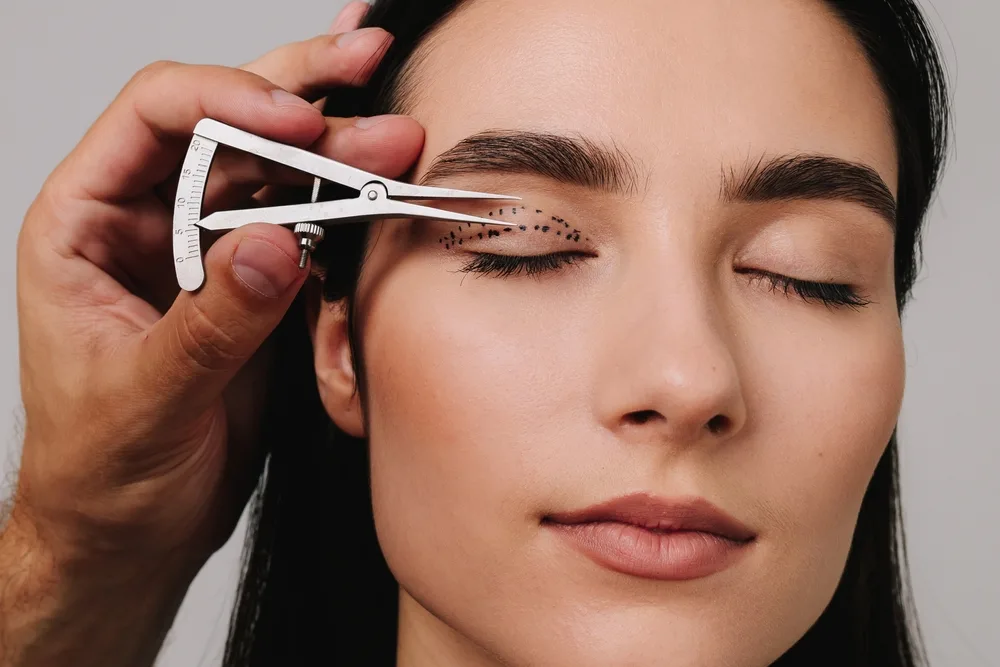
The eyes often reveal changes in aging before the rest of the face. Upper eyelid skin may begin folding over the natural crease, makeup can become harder to apply, and puffiness beneath the eyes may remain even after a full night of sleep. Friends may ask whether you are tired when you feel energetic, or photographs may show a heaviness around your eyes that doesn’t match how you see yourself.
Blepharoplasty, commonly called eyelid surgery or an eyelid lift, can improve the upper eyelids, lower eyelids, or both. Depending on your anatomy, the procedure may remove excess skin and muscle, reduce or reposition underlying fat, and restore a clearer contour around the eyes. In some cases, upper eyelid skin may become heavy enough to interfere with peripheral vision, so the procedure may provide a functional benefit as well as a cosmetic improvement.
At Women’s LifeCenter Aesthetic Surgery and Medispa, Elysa Fisher, MD, FACS, evaluates the eyelids as part of the entire upper face. She considers your eyebrow position, eyelid shape, skin quality, fat distribution, eye health, muscle strength, and natural asymmetry before recommending surgery. Her goal is not to make your eyes look stretched, hollow, or unfamiliar. It is to help them appear more open, rested, and naturally connected to the rest of your face.
Schedule a Complimentary Consultation
When Your Eyes Make You Look More Tired Than You Feel
Aging around the eyes can change your expression in ways that are difficult to control. Loose upper eyelid skin may make the eyes appear smaller, while bags beneath the lower eyelids can create shadows that remain throughout the day. You may find yourself lifting your eyebrows when reading or applying makeup because doing so temporarily moves the skin away from the upper lashes.
Our clients often describe the concern through daily experiences rather than medical terms. One client may say that eyeliner disappears beneath an upper fold, while another feels uncomfortable during video calls because lighting makes under-eye bags more visible. Someone else may have stopped wearing eye makeup entirely because the lids no longer have the smooth, visible space they once did. These concerns may seem small to another person, but they can influence how you present yourself every day.
Heredity also plays a role. Some people develop noticeable upper eyelid fullness or lower eyelid bags at a relatively young age, even when the rest of the face shows few signs of aging. Others experience gradual changes as eyelid skin loses elasticity and the supporting muscles weaken. Blepharoplasty can address selected structural concerns, but the plan must reflect whether the change comes from skin, fat, brow position, eyelid function, or several factors together.
What Is Blepharoplasty?
Blepharoplasty is a surgical procedure that improves the appearance or function of the eyelids. Surgery may be performed on the upper eyelids, lower eyelids, or both during the same operation. Depending on the treatment area, Dr. Fisher may remove excess skin, adjust selected muscle, and remove or reposition fat that contributes to puffiness or an uneven contour.
Upper blepharoplasty generally focuses on skin and tissue that hangs over the natural eyelid crease. Lower blepharoplasty more commonly addresses bags, puffiness, loose skin, and selected contour changes beneath the eyes. Although both procedures rejuvenate the eye area, they use different incision locations and solve different problems.
The goal is not to remove as much tissue as possible. The eyelids must still close comfortably, protect the eyes, and retain enough natural fullness to avoid a hollow or overly operated appearance. Conservative planning is especially important because even small changes around the eyes can affect expression and facial balance.
What Can Eyelid Surgery Improve?
Blepharoplasty may improve several concerns caused by loose skin, muscle changes, or displaced fat. However, not every line, shadow, or eyelid concern is created by the same structure. Dr. Fisher will identify what surgery can realistically improve and what may require another treatment.
Eyelid surgery may address:
- Loose or sagging upper eyelid skin
- Skin that hides the natural upper eyelid crease
- Upper eyelid heaviness that may affect peripheral vision
- Puffiness caused by prominent eyelid fat
- Bags beneath the lower eyelids
- Excess lower eyelid skin
- Fine wrinkles within skin being removed
- A tired or less alert resting expression
- Selected differences between the right and left eyelids
- Upper and lower eyelid concerns treated during one surgical plan
Blepharoplasty does not remove crow’s feet created by smiling or squinting. It also cannot correct every dark circle, especially when darkness comes from pigmentation, visible blood vessels, allergies, thin skin, or a hollow beneath the lower eyelid. Other treatments may be considered when muscle movement, skin quality, brow descent, or volume loss contributes to the appearance around the eyes.
Upper Eyelid Blepharoplasty
Upper eyelid surgery removes a measured amount of excess skin through an incision placed within the natural eyelid fold. Selected muscle or fat may also be adjusted when those tissues contribute to heaviness or puffiness. Once healed, the incision is usually concealed within the crease when the eyes are open, although every surgical incision leaves a permanent scar.
The amount of skin removed must be planned carefully. Removing too little may leave the client feeling that the concern was not adequately treated, while removing too much can create tightness or difficulty closing the eyes. Dr. Fisher evaluates the eyelid with the brow relaxed because lifting the eyebrows during the examination can temporarily hide the true amount of upper eyelid skin.
Upper blepharoplasty may make the eye area appear more open and can create more visible space for eye makeup. It may also reduce the constant effort of raising the forehead when excess skin is contributing to heaviness. However, surgery does not change the eye itself or create an entirely different natural eyelid shape.
Lower Eyelid Blepharoplasty
Lower eyelid surgery may address bags, bulging fat, loose skin, and selected contour irregularities beneath the eyes. Depending on the concern, the incision may be placed just below the lower eyelashes or inside the lower eyelid. Fat may be removed or redistributed rather than simply taken away, particularly when preserving a smooth transition between the lower eyelid and cheek is important.
A client with prominent bags but firm skin may require a different approach from someone who also has significant skin looseness. Likewise, a hollow beneath the eyes may become more noticeable if too much fat is removed. Dr. Fisher considers both fullness and surrounding volume so the lower eyelid does not look emptied or disconnected from the cheek.
Lower eyelid surgery requires particular attention to eyelid support. The lower lid must remain in a healthy position against the eye, and existing looseness may affect the surgical plan. Dr. Fisher will examine eyelid tone, eye shape, previous procedures, and dryness before deciding whether lower blepharoplasty is appropriate.
Blepharoplasty, Brow Lift, or Both?
Upper eyelid heaviness does not always come entirely from the eyelid. As the eyebrows descend, the tissue beneath them may move downward and create additional fullness over the outer eyelids. Removing eyelid skin alone may provide an incomplete result when a low brow is an important part of the concern.
A forehead or brow lift raises the brow and forehead tissues, while blepharoplasty removes or adjusts selected eyelid tissue. Some clients need only upper eyelid surgery because the brows remain in a natural position. Others may benefit from a brow lift, or from combining both procedures when brow descent and excess eyelid skin are present together.
The distinction is important because each procedure changes a different structure. Dr. Fisher will observe your eyebrows while your forehead is relaxed rather than asking you to hold them in an elevated position. This helps determine whether the heaviness begins at the brow, within the eyelid, or in both areas.
Blepharoplasty Versus Ptosis Repair
Blepharoplasty treats excess skin, muscle, or fat around the eyelids. Ptosis is a different condition in which the edge of the upper eyelid itself sits too low and may approach or cover part of the pupil. A person can have excess skin without ptosis, ptosis without much excess skin, or both concerns at the same time.
When true eyelid ptosis is present, removing skin alone may not adequately open the eye. An additional procedure may be needed to strengthen or adjust the mechanism that raises the eyelid. Mayo Clinic notes that blepharoplasty may be combined with ptosis surgery when the upper eyelid droops close to the pupil.
This is another reason a careful examination matters. Clients often use the word “drooping” to describe several different changes, but those changes do not all require the same operation. Dr. Fisher will help you understand whether the concern involves skin, brow position, eyelid position, or a combination.
Cosmetic and Functional Eyelid Surgery
Many eyelid procedures are performed to create a more refreshed appearance. However, severely sagging upper eyelid skin may interfere with peripheral vision, particularly in the upper and outer portions of the visual field. In that situation, surgery may have a functional purpose in addition to improving appearance.
Insurance coverage may be possible when documented eyelid skin interferes with vision, but each plan has its own medical-necessity requirements. The evaluation may include eyelid measurements, standardized photographs, and visual field testing to show whether the skin blocks part of the peripheral field. Surgery performed only for cosmetic improvement is generally not covered.
Contact your insurance company directly to ask about current requirements, referrals, authorization, deductibles, and network restrictions. Coverage cannot be promised simply because the eyelids feel heavy. If your concern may be functional, the appropriate testing and documentation should be completed before surgery rather than after the procedure has already been performed.
Am I a Candidate for Eyelid Surgery?
A suitable candidate is generally in good overall health, has realistic expectations, and is bothered by upper or lower eyelid changes that surgery can address. You should also understand that the eyelids are delicate structures and that temporary swelling, bruising, dryness, and changes in sensation are part of the healing process. The decision should come from your own goals rather than pressure to look younger or meet someone else’s idea of beauty.
You may be ready to discuss blepharoplasty if:
- Upper eyelid skin has become loose or heavy
- The natural eyelid crease is hidden
- Puffiness or bags remain beneath the eyes
- Your eyes appear tired when you feel rested
- Eye makeup has become difficult to apply
- Upper eyelid skin may be affecting peripheral vision
- You understand that surgery will not remove every line or dark circle
- You can follow postoperative eye-care instructions
- You can stop smoking and nicotine use as directed
- Your expectations focus on natural improvement
Eye health is an important part of candidacy. Dr. Fisher needs to know about dry eye symptoms, glaucoma, retinal concerns, thyroid disease, diabetes, allergies, previous eye surgery, contact lens use, vision changes, and difficulty closing the eyes. Medical conditions and medications that affect bleeding or healing must also be reviewed before a procedure is recommended.
Your Consultation With Dr. Elysa Fisher
Your consultation begins with what you have noticed and how the change affects you. Dr. Fisher will ask whether your concern involves upper eyelid skin, lower eyelid bags, vision, asymmetry, makeup application, or a general tired appearance. She will also want to know how much change you want and whether you are considering another facial procedure.
During the examination, Dr. Fisher evaluates the eyelids at rest and during movement. She studies brow position, eyelid skin, fat distribution, lower eyelid support, eye closure, facial symmetry, and the relationship between the eyelids and cheeks. Photographs may be taken from several angles, and additional eye or visual-field testing may be recommended when symptoms suggest a functional problem.
Dr. Fisher completed her undergraduate, graduate, and postgraduate education at Northwestern University. She became board-certified in plastic and reconstructive surgery in 1992 and has spent decades providing both surgical and non-surgical aesthetic care. She believes a surgeon should remain accessible and serve as a source of information, which means helping clients understand both what a procedure may accomplish and where its limits begin.
Our clients frequently describe Dr. Fisher as detailed, compassionate, and willing to answer their questions thoroughly. They also describe the office as calm and welcoming, which can make a facial procedure feel less intimidating. This matters with eyelid surgery because normal early swelling can make the eyes look unfamiliar before the result begins settling.
Preparing for Blepharoplasty
Preparation may include a medical evaluation, laboratory testing, an eye examination, eyelid measurements, and photographs. Dr. Fisher will review prescription medicines, over-the-counter products, vitamins, and supplements because some can increase bleeding or affect healing. Never stop a prescribed blood thinner or another medication unless the clinician who manages it approves the change.
Smoking and nicotine use must be discussed honestly. Nicotine reduces blood flow and may interfere with wound healing, so you will need to follow Dr. Fisher’s instructions about stopping before and after surgery. You should also arrange for someone to drive you home and stay with you during the first night when instructed.
Prepare a comfortable recovery area with your medications, approved eye products, water, and frequently used items within easy reach. Dark sunglasses can help protect the healing eyes from sunlight and make you feel more comfortable when leaving the house. You may also need to pause contact lens use and rely on glasses until Dr. Fisher confirms that lenses can be worn safely again.
What Happens During Eyelid Surgery?
Blepharoplasty is generally performed as an outpatient procedure. Anesthetic may be injected into the eyelids, and medication may be provided through an intravenous line to help you relax. The exact anesthesia plan depends on whether the upper eyelids, lower eyelids, or both are being treated and whether another procedure is included.
For upper eyelid surgery, the incision is usually placed within the natural eyelid fold. Dr. Fisher removes or adjusts the planned amount of skin, muscle, and fat before closing the incision carefully. For lower eyelid surgery, the incision may be placed just beneath the lashes or inside the lower eyelid, after which fat, skin, or muscle can be removed or repositioned according to the treatment plan.
You will spend time in a recovery area after surgery so the team can monitor you before you return home. Lubricating ointment may temporarily blur vision, and the eyelids may feel tight, puffy, or numb. You will receive instructions about incision care, approved compresses, medication, activity, sleeping position, and symptoms that require an immediate call.
Eyelid Surgery Recovery
Initial recovery commonly includes swelling, bruising, irritation, dry eyes, light sensitivity, and mild discomfort. Some clients experience watery eyes or temporarily blurred vision from ointment. These effects generally improve as healing progresses, although one eye may settle more quickly than the other.
Keeping the head elevated may help manage swelling. Dr. Fisher may recommend approved cold compresses, lubricating products, and medication, but you should follow her instructions rather than placing unapproved products near the eyes. Rubbing the incisions, straining, bending deeply, and strenuous exercise may need to be avoided during early healing.
Many clients feel comfortable returning to public activities within approximately 10 to 14 days, although some bruising or swelling may still be visible. Makeup may help conceal remaining discoloration once Dr. Fisher confirms that it is safe to apply near the incisions. Final healing continues for several months as the swelling decreases and the scars soften.
Sun protection is especially important during recovery because fresh scars can darken with ultraviolet exposure. Dark sunglasses protect the eyes from light sensitivity and shield the healing area. The American Society of Plastic Surgeons recommends diligent sun protection until the healing process is complete.
Eyelid Surgery Scars
Upper eyelid scars are generally positioned within the natural fold, while lower eyelid scars may sit just below the eyelashes or be avoided on the outer skin when an internal approach is appropriate. These locations are selected because they can become less noticeable as they heal. However, all external incisions leave permanent scars, and individual healing varies.
Early scars may look pink, firm, or slightly raised. Over time, they often soften and blend more closely with the surrounding skin, but complete disappearance cannot be promised. Sun exposure, genetics, infection, tension, nicotine use, and the way your body forms scars can influence the final appearance.
The eyelid skin is thin, which can help scars become subtle, but it also requires delicate handling. Follow Dr. Fisher’s directions about cleansing, ointment, makeup, and sun protection. Do not apply scar products near the eyes unless they have been specifically approved for that location.
How Long Do Blepharoplasty Results Last?
Eyelid surgery can create a long-lasting improvement because the removed skin and fat do not simply return. However, the eyes and surrounding tissues continue aging, and the brows, cheeks, and remaining eyelid skin may gradually change. Genetics, sun exposure, skin quality, and general health all influence how the result matures.
Upper eyelid surgery may remain satisfying for many years, while lower eyelid bags often improve for a long period after appropriately planned surgery. Still, no procedure can promise that you will never notice new looseness or puffiness. A future treatment may eventually be considered, but repeat surgery is not automatically necessary.
The best result should look like a rested version of you rather than a different person. Friends may notice that your eyes seem brighter without immediately identifying why. Dr. Fisher plans the procedure around your existing eye shape and facial proportions so the improvement remains connected to your natural expression.
Risks and Important Considerations
Blepharoplasty is surgery and carries potential risks. These include bleeding, infection, dry or irritated eyes, difficulty closing the eyes, changes in sensation, noticeable scarring, asymmetry, eyelid position problems, light sensitivity, persistent pain, and the possible need for revision surgery. Temporary blurred vision may occur, while permanent vision change or blindness is very rare but recognized.
Lower eyelid complications can include lid lag or ectropion, in which the lower eyelid pulls away from the eye or turns outward. Existing eyelid looseness, previous surgery, and the amount of tissue removed may affect this risk. Dr. Fisher will evaluate eyelid support and explain whether any additional step may be needed to protect the lower lid.
Contact the office immediately if you experience severe eye pain, sudden swelling, heavy bleeding, worsening visual changes, chest pain, shortness of breath, or another urgent symptom identified in your postoperative instructions. Do not wait for a routine follow-up when something feels significantly wrong. Early evaluation is especially important with any sudden change in vision.
Why Choose Dr. Elysa Fisher for Blepharoplasty in Wilmette?
The eyelids contain some of the thinnest and most delicate skin on the body. Successful surgery requires knowledge of eyelid function, facial anatomy, brow position, fat compartments, symmetry, and the way small adjustments affect expression. Dr. Fisher brings decades of plastic surgery experience to that planning and provides both surgical and non-surgical facial care.
Her Northwestern education and board certification are only part of what defines the experience. Dr. Fisher created Women’s LifeCenter Aesthetic Surgery and Medispa around the belief that women deserve a supportive place to understand their options and make personal decisions without feeling rushed. She views her role as both surgeon and source of information, which is especially important when several procedures could appear to address the same concern.
Your recommendation may involve upper blepharoplasty, lower blepharoplasty, both eyelids, a forehead lift, a non-surgical treatment, or no procedure at all. The purpose of the consultation is to identify the real source of the change and determine whether surgery can create enough improvement to justify the recovery and risks. The most natural result begins with choosing the right procedure, not simply removing the greatest amount of tissue.