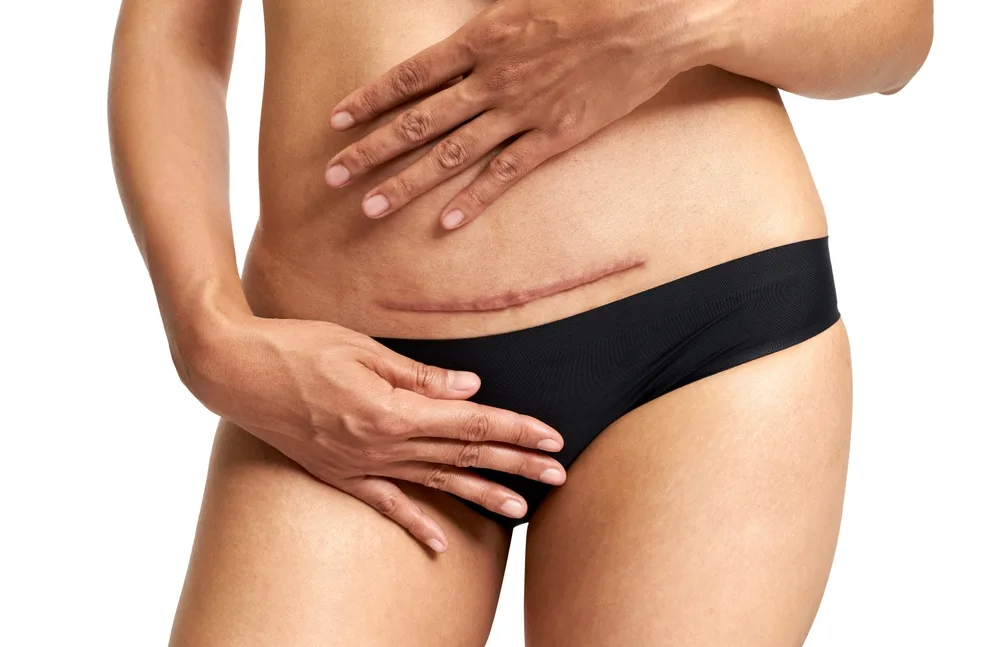
A scar may represent healing, but that does not mean you have to feel comfortable with the way it looks or behaves. It may be wider, darker, raised, indented, uneven, or more noticeable than you expected after surgery or an injury. Some scars also itch, feel tender, pull against nearby tissue, or restrict movement when they cross a joint or natural facial feature.
Scar revision is a personalized treatment intended to make a scar less conspicuous or improve the way it functions. Depending on the scar, treatment may involve surgical removal and precise reclosure, injectable therapy, microneedling, topical support, or a combination of methods. Scar revision cannot erase a scar completely. Its purpose is to replace or modify an unfavorable scar so it blends more naturally with the surrounding skin or causes fewer physical symptoms.
At Women’s LifeCenter Aesthetic Surgery and Medispa, Elysa Fisher, MD, FACS, examines the scar’s location, direction, width, color, texture, depth, symptoms, and relationship to nearby structures. She also considers how the original wound occurred and how your body has healed after other injuries or procedures. The goal is not simply to cut out visible scar tissue. It is to understand why the scar became noticeable and create a plan that gives the new wound the best reasonable opportunity to heal more favorably.
Schedule a Complimentary Consultation
When a Healed Scar Still Affects You
A scar can be medically healed and still remain emotionally or physically present. A facial scar may catch light differently from the surrounding skin, making it appear more prominent in photographs. A surgical scar may have widened, become uneven, or healed in a direction that draws the eye. Another scar may be hidden beneath clothing but remain uncomfortable because it rubs, itches, or feels tight during movement.
Our clients may describe changing ordinary habits around a scar. They may avoid certain necklines, hairstyles, swimwear, or photographs because the scar is visible. Others massage or cover the area repeatedly because the texture or color continues to bother them. A scar across the abdomen, shoulder, knee, hand, or another mobile area may also pull during exercise or interfere with comfortable movement.
These concerns do not mean the original physician or wound care was necessarily poor. Scar development is influenced by the depth and direction of the injury, tension on the skin, infection, genetics, skin tone, location, sun exposure, and individual healing biology. Even an incision that is carefully planned and closed can become raised, wide, dark, pale, indented, or otherwise noticeable.
What Is Scar Revision?
Scar revision includes surgical and non-surgical techniques used to improve the appearance or function of a scar. Treatment is selected according to the scar type rather than using the same procedure for every mark. A flat scar with uneven color requires a different approach from a wide surgical scar, an indented acne scar, a raised hypertrophic scar, or a contracture that limits movement.
A surgical revision generally removes the existing scar and closes the resulting wound more precisely. Deeper support may be added beneath the skin to reduce surface tension, and the new incision may be redirected to follow a natural crease or relaxed skin line more effectively. Some scars can be improved with one technique, while others require a combination of surgery, injections, topical care, or surface treatments.
The procedure creates a new scar, so the word “revision” is more accurate than “removal.” The objective is to exchange an unfavorable scar for one that is thinner, smoother, better positioned, more flexible, or less visually distracting. No surgeon can promise that the new scar will disappear or that your skin will heal exactly like the skin surrounding it.
Understanding Different Types of Scars
Scars vary because wounds and healing responses vary. Correctly identifying the type of scar is one of the most important parts of treatment planning. A procedure that helps one scar could provide little benefit or even create a more noticeable problem when used for another.
Wide or Stretched Scars
A scar may gradually widen when tension repeatedly pulls on the healing incision. This is common on the shoulders, chest, abdomen, back, knees, and other areas exposed to frequent movement. The scar may be flat but much wider than the original incision, with a color or texture that contrasts with the surrounding skin.
Surgical revision may remove the widened tissue and allow the wound to be reclosed in layers. However, the forces that stretched the original scar must be considered. If the same tension remains, the revised scar can widen again.
Hypertrophic Scars
A hypertrophic scar is thick, raised scar tissue that remains within the boundaries of the original wound. It may appear red, darker, lighter, firm, itchy, painful, or uncomfortable. Some hypertrophic scars soften naturally over time, while others remain prominent or symptomatic.
Treatment may include silicone therapy, injections, laser or light procedures, pressure, or surgical revision. A combination is sometimes more effective than relying on surgery alone. The treatment selected depends on the scar’s maturity, thickness, location, symptoms, and response to previous care.
Keloid Scars
A keloid grows beyond the boundaries of the original injury. It may continue enlarging after the wound has closed and can cause itching, pain, sensitivity, or a pulling sensation. Keloids commonly appear on the ears, chest, shoulders, neck, and other areas, although they may develop anywhere.
Keloids require particular caution because cutting one out can trigger another strong scar response. The American Academy of Dermatology reports a very high recurrence rate when keloids are treated with surgery alone, so surgery is commonly paired with injections, pressure, silicone, freezing, radiation, or another carefully selected treatment.
Depressed or Indented Scars
Some scars sit below the surrounding skin because tissue was lost or became attached to deeper structures during healing. Acne scars are common examples, although injury and surgery may also create indented areas. Depending on the scar, treatment could involve microneedling, surface treatment, surgical release, filler, excision, or a combined plan.
Not every depression should simply be filled. Dr. Fisher evaluates whether the scar is tethered, whether surface texture is the main concern, and how thick the surrounding skin is. A scar attached firmly to deeper tissue may require release before surface improvement becomes possible.
Scar Contractures
A contracture forms when scar tissue tightens and pulls the skin and underlying tissue together. It may restrict movement when it crosses a finger, elbow, knee, neck, eyelid, mouth, or another mobile structure. Contractures can also occur after burns or injuries involving significant tissue loss.
Treatment focuses on function as well as appearance. Techniques such as Z-plasty, local tissue rearrangement, grafting, or flap closure may redirect or lengthen the scar so movement becomes easier. More extensive contractures can require staged reconstructive treatment.
What Can Scar Revision Improve?
Scar revision may be considered for scars caused by surgery, accidents, burns, cuts, acne, infection, or another injury. The possible improvement depends on the scar’s age, location, depth, type, and the quality of the surrounding skin.
Treatment may help address:
- A wide or stretched surgical scar
- A raised or thick hypertrophic scar
- A carefully evaluated keloid as part of a combined plan
- An indented or tethered scar
- Uneven scar edges or surface texture
- A scar positioned across a natural skin crease
- A scar that pulls on nearby tissue
- Tightness that restricts movement
- Itching, tenderness, or discomfort associated with raised scar tissue
- A scar whose color or texture differs noticeably from the surrounding skin
Improvement does not always mean making the scar shorter. A longer, carefully repositioned scar may be less noticeable than a shorter line that crosses natural skin tension in an unfavorable direction. Similarly, improving flexibility or movement may be more important than achieving the smallest possible scar.
Surgical and Non-Surgical Scar Treatment
Not every scar should be surgically removed. Some scars may improve through silicone gel or sheeting, injectable medication, microneedling, laser or light treatment, dermabrasion, or another surface procedure. Raised scars may benefit from corticosteroid injections that reduce excess collagen production, while selected depressed scars may respond to treatments that stimulate remodeling or restore support beneath the surface.
Surgery may be more appropriate when a scar is wide, poorly positioned, deeply tethered, irregularly closed, or physically restrictive. It may also be considered when conservative treatments have not produced enough improvement. The old scar is removed, and the wound is closed using a technique selected to improve direction, support, and contour.
Sometimes the most effective plan combines approaches. A raised scar may be softened with injections before or after revision. Microneedling or another surface treatment may later improve texture after the new incision has healed. Silicone support and sun protection may also be used during scar maturation. Scar care is often a process rather than a single appointment.
Is It Too Early to Revise My Scar?
Scars continue changing after the surface of a wound has closed. Early scars often look red, dark, firm, raised, or uneven before they soften and fade. The American Society of Plastic Surgeons notes that a revised scar may continue healing and refining for several months and can take up to a year to fully mature.
For that reason, immediate surgical revision is not always the best choice. A scar that looks concerning at three months may improve substantially as inflammation decreases and collagen reorganizes. Early treatment may instead focus on wound support, silicone, sun protection, massage when appropriate, or injections for a scar that is becoming raised.
There are exceptions. A scar that is pulling an eyelid or lip out of position, limiting movement, repeatedly opening, becoming infected, or creating another functional problem may require earlier attention. Dr. Fisher will evaluate whether waiting could allow continued improvement or whether the scar’s structure makes spontaneous correction unlikely.
Am I a Candidate for Scar Revision?
Scar revision can be considered at many ages, provided the scar and the client’s health are appropriate for treatment. A suitable candidate is generally healthy, does not smoke, has no active skin disease in the treatment area, and understands that the result will still include a scar. Realistic expectations are essential because revision improves a scar rather than returning the skin to an uninjured state.
You may be ready to discuss scar revision if:
- A scar remains wide, raised, depressed, uneven, or uncomfortable
- The scar pulls on nearby skin or limits movement
- The original wound has healed and the scar has had time to mature
- Conservative scar treatments have not provided enough improvement
- You understand that a new scar will replace or modify the old one
- You can avoid nicotine as directed
- You do not have an active infection, rash, or acne outbreak in the area
- You can protect the revised incision during healing
- Your goal is meaningful improvement rather than complete erasure
Your history of scar formation matters. Tell Dr. Fisher if you have developed keloids, thick scars, widened incisions, prolonged discoloration, or wound-healing complications after previous injuries. Family history, skin tone, medications, diabetes, immune conditions, nicotine use, and the location of the scar may all influence the recommendation.
Your Consultation With Dr. Elysa Fisher
Your consultation begins with the story of the scar. Dr. Fisher will ask how the original wound occurred, when it healed, whether infection or wound separation developed, and how the scar has changed over time. She will also want to know whether it itches, hurts, pulls, becomes irritated, or affects movement.
Dr. Fisher examines the scar’s width, length, direction, color, thickness, depth, flexibility, and relationship to nearby structures. She also evaluates the surrounding skin and the tension that may have affected the original healing. Photographs may be taken for your medical record, and previous operative reports or treatment records can be helpful when they are available.
The consultation should clarify whether the scar is mature enough for revision, which technique may be appropriate, and what kind of improvement is realistic. You will also discuss the expected length and position of the revised scar, recovery restrictions, recurrence risks, and whether additional treatments may be needed.
Dr. Fisher completed her undergraduate, graduate, and postgraduate education at Northwestern University and has been board-certified in plastic surgery since 1992. She views her role as both surgeon and source of information, helping clients understand the benefits, limits, and tradeoffs of treatment before making a decision.
How Surgical Scar Revision Is Performed
The procedure may be completed with local anesthesia, intravenous sedation, or general anesthesia. The appropriate choice depends on the scar’s size, depth, location, complexity, and whether a more extensive reconstructive technique is required.
For a straightforward revision, Dr. Fisher removes the old scar and carefully prepares the wound edges. Deeper sutures may be placed beneath the surface to support the skin and reduce tension. The outer skin is then brought together as precisely as possible, with attention to alignment, contour, and nearby natural creases.
More complex scars may require Z-plasty or W-plasty. These techniques reorganize a straight scar into smaller angled segments, allowing the line to follow natural skin patterns more effectively or releasing tightness caused by a contracture. Local flaps, grafts, or tissue expansion may be considered when healthy surrounding skin is limited or a severe scar affects a larger area.
A dressing, surgical tape, or another form of support may be placed afterward. Dr. Fisher will explain how to clean the area, when to change dressings, and whether stitches need to be removed. Follow-up care is important because early swelling and tension can influence the way the revised incision heals.
Preparing for Scar Revision
Preparation depends on the extent of treatment. You may need medical evaluation or laboratory testing, and certain medicines or supplements may need to be adjusted. Aspirin, some anti-inflammatory medicines, and selected supplements can increase bleeding, but you should not stop a prescribed medication unless the clinician who manages it approves the change.
Nicotine can reduce blood flow and interfere with healing. Cigarettes, vaping, nicotine pouches, gum, and patches should all be discussed honestly. Dr. Fisher will provide instructions about when nicotine must be stopped before and after the procedure.
You may also need to adjust work, exercise, or childcare according to the scar’s location. A revision on the shoulder, chest, abdomen, knee, hand, or another mobile area can reopen or widen if the incision is repeatedly stretched. Planning for these limitations protects the new closure during the period when it is most vulnerable.
Scar Revision Recovery
Localized swelling, discoloration, tenderness, tightness, and mild discomfort are common during the first stage of healing. The American Society of Plastic Surgeons describes an initial recovery period of approximately one to two weeks for many surgical revisions, although the timeline varies according to the location and extent of treatment.
The new scar may initially look more noticeable than the old one because it is fresh and inflamed. It can appear red, pink, dark, firm, or slightly raised before gradually softening. This early appearance should not be mistaken for the final result.
Movement restrictions depend heavily on location. A facial scar may require different precautions from a scar across the back, chest, abdomen, or joint. Incisions should be protected from excessive force, rubbing, stretching, and sun exposure while they heal.
Scar maturation continues long after ordinary activities have resumed. Several months may pass before the line begins blending more naturally with the surrounding skin, and final refinement can take a year. Additional treatment may be discussed if the revised scar begins thickening, darkening, widening, or developing another unfavorable characteristic.
Risks and Important Considerations
Scar revision involves the same uncertainty that affects every wound. Possible complications include bleeding, infection, delayed healing, fluid accumulation, skin loss, changes in sensation, persistent pain, discoloration, asymmetry, an unfavorable result, and the need for another procedure. The new scar may also widen, become raised, remain noticeable, or recur in a form similar to the original scar.
Keloids carry a particularly strong risk of recurrence. Surgery alone is often not the preferred strategy, and even combined treatment cannot guarantee that the keloid will not return. The decision should be based on the scar’s symptoms, location, treatment history, and your willingness to complete follow-up therapies.
Contact the office for increasing pain, spreading redness, unusual warmth, drainage, fever, wound separation, rapidly increasing swelling, darkening skin, or another symptom identified in your aftercare instructions. Do not pull at sutures, repeatedly apply harsh antiseptics, or begin unapproved scar products while the incision remains open.
Why Choose Dr. Elysa Fisher for Scar Revision in Wilmette?
Scar revision requires more than removing visible tissue. The surgeon must evaluate skin tension, wound direction, blood supply, movement, tissue depth, and the reason the original scar healed unfavorably. On the face or near a joint, the surgeon must also protect expression, alignment, and function while attempting to make the scar less noticeable.
Dr. Fisher brings decades of surgical experience and Northwestern training to this detailed planning. Her approach is grounded in honest communication, including the fact that no scar can be erased and no healing result can be guaranteed. She will explain whether surgery is likely to improve the scar or whether another treatment, more healing time, or observation would make greater sense.
Women’s LifeCenter Aesthetic Surgery and Medispa was created as a calm and supportive place where clients can understand their options. Clients describe Dr. Fisher as detailed, compassionate, accessible, and attentive during follow-up care. They also value being told what to expect, which is especially important when a revised scar temporarily looks more visible before it begins to mature.