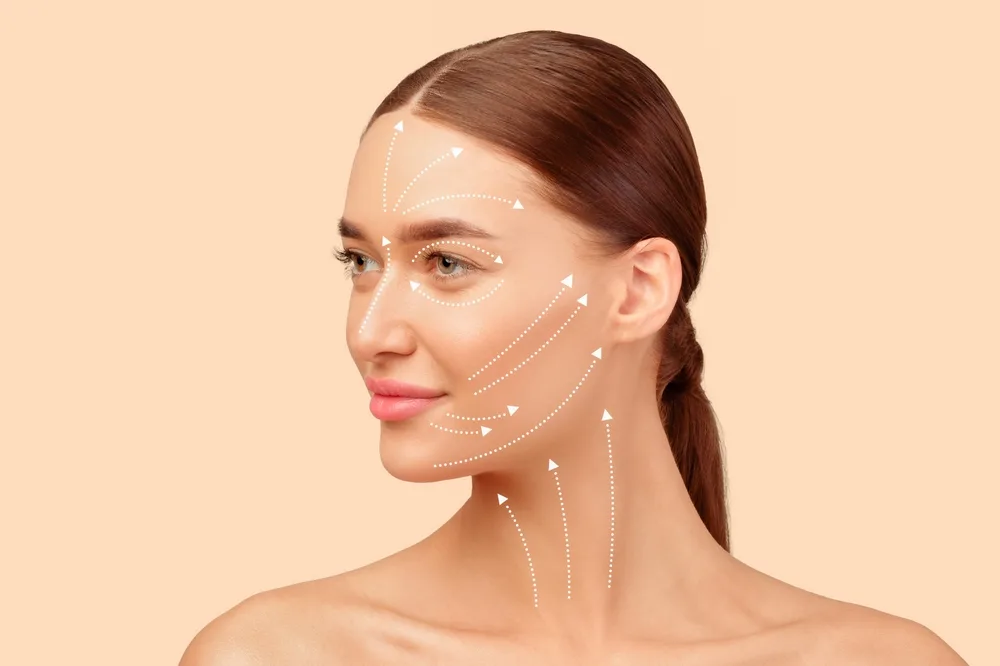
Facial aging rarely happens in one isolated place. The cheeks gradually settle, folds around the mouth become deeper, the jawline loses definition, and skin beneath the chin may begin to loosen. You may still feel energetic and engaged, yet your reflection can appear tired, stern, or older than the person you recognize inside.
A facelift, medically known as rhytidectomy, is a surgical procedure that improves visible aging in the face and, depending on the surgical plan, the jawline and neck. Rather than simply pulling the surface skin tighter, facelift surgery can reposition descended tissue, improve jowls, refine the jawline, and remove selected excess skin. It cannot stop aging or change your fundamental appearance, but it can restore facial contours that have softened over time.
At Women’s LifeCenter Aesthetic Surgery and Medispa, Elysa Fisher, MD, FACS, approaches facelift surgery as restoration, not reinvention. She evaluates your cheeks, jawline, neck, skin quality, facial volume, hairline, and natural asymmetry before recommending a plan. Her goal is to help you look refreshed and more like yourself, without creating a tight, windblown, or obviously operated appearance.
Schedule a Complimentary Consultation
When Your Reflection No Longer Matches Your Energy
Clients rarely arrive saying they want an entirely different face. More often, they describe a series of smaller changes that have begun working together. Their jawline looks softer in photographs, shadows around the mouth have deepened, or loose tissue appears beneath the chin when they turn to the side. They may also find that injectables and skincare still improve individual concerns but no longer address the downward movement of the face.
These changes can affect ordinary moments. A client may angle her face during video calls, pull gently at the skin near her ears while looking in the mirror, or begin avoiding profile photographs because the neck and jawline no longer feel defined. Another may hear that she looks tired or upset when she feels neither. Although these concerns are cosmetic, they can influence how comfortably someone communicates, dresses, attends events, and presents herself in daily life.
Dr. Fisher’s current facelift philosophy speaks directly to this stage. Her practice describes the moment when non-surgical approaches no longer provide the change a client wants and jowls, reduced jawline definition, or fullness beneath the chin become more prominent. The purpose of consultation is to determine whether surgery is truly the right next step, rather than continuing treatments that cannot correct the underlying tissue descent.
What Is a Facelift?
A facelift is surgery designed to improve visible aging in the lower and middle portions of the face. It may address relaxed facial skin, deeper folds between the nose and mouth, descended facial fat, jowls, and loose skin or fullness beneath the chin. Although the name suggests that the entire face is treated, a traditional facelift generally focuses more on the cheeks, lower face, jawline, and often the neck than on the forehead or eyelids.
The operation may involve repositioning supportive tissue beneath the skin, redistributing or reducing selected fat, redraping the skin over the improved contours, and trimming excess skin. This deeper approach is important because relying only on skin tension can create a less natural result and may not adequately correct jowling or tissue descent. The exact technique and extent of surgery should be selected according to the client’s anatomy rather than a procedure name used for marketing.
A facelift also does not treat every sign of facial aging. Brow descent, upper eyelid skin, under-eye bags, surface pigmentation, fine etched lines, and volume loss may require other procedures. Dr. Fisher looks at the entire face so the lower face is not rejuvenated without considering how it relates to the eyes, brows, skin, and neck.
What Can Facelift Surgery Improve?
Facelift surgery may create a smoother transition from the cheeks to the jawline and restore definition that has gradually been lost. The amount of change depends on tissue quality, skin elasticity, facial structure, previous procedures, and the extent of surgery. The goal should be meaningful improvement rather than a perfectly smooth or artificially tightened face.
A personalized facelift may address:
- Jowls along the lower cheeks and jawline
- Loose or sagging facial skin
- Reduced jawline definition
- Descended cheek tissue
- Deepened folds between the nose and mouth
- Creases extending downward from the corners of the mouth
- Loose skin beneath the chin
- Selected fullness along the lower face or neck
- A tired, heavy, or less defined facial appearance
- Differences between facial and neck aging that affect overall balance
Facelift surgery cannot permanently remove every wrinkle, eliminate pores, correct pigmentation, or prevent future aging. It also cannot guarantee perfect symmetry because the two sides of the face differ naturally before surgery and may heal differently afterward. The American Society of Plastic Surgeons describes a facelift as restorative surgery that improves aging without changing the person’s fundamental appearance.
A Facelift Is Not Simply Tighter Skin
One of the most common fears clients express is that they will look pulled or unlike themselves. That concern is understandable because an overcorrected result can alter the hairline, distort the ears, flatten natural contours, or place too much tension on the skin. A thoughtful facelift should instead restore support beneath the surface and allow the skin to lie more naturally over the repositioned tissue.
Facial aging involves more than skin laxity. Fat may lose volume in some areas while descending or collecting in others. Supportive tissue weakens, facial ligaments change, and the jawline becomes less distinct. Sun exposure and reduced collagen also affect the surface of the skin. Because several processes occur together, simply pulling the skin cannot fully restore a balanced contour.
Dr. Fisher studies the face from the front, side, and angled views. She considers how the cheeks flow into the lower face, whether fullness comes from fat or descended tissue, and how the jawline relates to the chin and neck. This broader assessment helps prevent one feature from being tightened without considering the rest of the face.
Facelift and Neck Lift Surgery
Facial and neck aging frequently appear together. Jowling may blur the jawline while loose skin, fat beneath the chin, or visible neck bands affect the profile below it. Treating only the face can leave a noticeable difference when the neck remains significantly aged, while treating only the neck may not fully address tissue descending from the cheeks.
A neck lift, also called lower rhytidectomy, is designed to improve jowls, excess fat beneath the chin, loose neck skin, and visible neck muscle banding. It may be performed independently or combined with facelift surgery when both regions contribute to the concern. Combining them can create a smoother and more consistent transition from the cheeks through the jawline and neck.
Not every facelift client needs extensive neck surgery. One client may have early jowling with a relatively firm neck, while another may be most concerned about loose tissue beneath the chin. Dr. Fisher determines which regions need treatment instead of automatically performing the same operation on every face.
Facelift Surgery Versus Non-Surgical Treatments
Injectables, PDO threads, skin peels, microneedling, and other non-surgical treatments can be useful when the concern involves expression lines, mild volume loss, skin texture, or early tissue laxity. These options generally involve less recovery, but they cannot remove excess skin or reposition deeper facial tissue to the same degree as surgery. The American Society of Plastic Surgeons notes that minimally invasive treatments cannot produce the same result as a surgical facelift, although they may delay surgery or complement its results.
Dermal filler can restore selected volume, but adding volume is not always the right answer for a face that has become heavier along the lower cheeks. Too much filler may make the face appear wider or less defined when tissue descent is the main problem. PDO threads may create a modest temporary lift in carefully selected clients, but they cannot remove meaningful loose skin or reproduce the correction available through facelift surgery.
Xeomin can soften lines created by muscle movement, yet it does not lift jowls or tighten the neck. Likewise, skincare and resurfacing treatments can improve tone and texture but cannot reposition the lower face. Dr. Fisher helps clients separate what each treatment can accomplish so they do not continue adding products or procedures that no longer match the source of the concern.
Limited and More Comprehensive Facelift Plans
Facelift terminology can become confusing because terms such as mini facelift, lower facelift, SMAS facelift, deep plane facelift, and full facelift are often used differently between practices. A shorter incision or less extensive procedure may be appropriate when aging is relatively early and limited to a specific region. More advanced jowling, facial descent, or neck laxity may require a more comprehensive operation.
The technique should follow the anatomy rather than the other way around. A client should not choose a mini facelift simply because it sounds easier if a limited procedure cannot create the desired improvement. Likewise, someone with early changes should not undergo a more extensive operation solely because a certain technique is receiving attention online.
During consultation, Dr. Fisher will explain what tissue needs to be repositioned, which areas will be treated, where incisions are expected, and why the recommended extent is appropriate. She will also discuss whether a forehead lift, eyelid surgery, facial volume treatment, or skin treatment would serve a separate purpose.
Am I a Candidate for Facelift Surgery?
A suitable facelift candidate is generally in good overall health, does not smoke, and has realistic expectations about improvement, scars, recovery, and continued aging. The procedure should be chosen for personal reasons rather than to satisfy a partner or match an ideal image. Age alone does not determine candidacy because people develop facial aging at different rates.
You may be ready to discuss facelift surgery if:
- Jowls have reduced the definition of your jawline
- Loose facial or neck skin bothers you
- Non-surgical treatments no longer address the main concern
- Your reflection appears more tired or heavy than you feel
- You understand that surgery creates permanent scars
- You can stop nicotine use as medically directed
- You can arrange help during the beginning of recovery
- You can accommodate time away from work and social commitments
- Your goals focus on restoration rather than perfection
Certain health conditions may increase surgical or healing risks. Poorly controlled diabetes, high blood pressure, bleeding disorders, and other medical concerns require careful evaluation. Smoking is especially significant because it restricts blood flow and increases the risk of poor healing, hematoma, and skin loss after facelift surgery.
Your Consultation With Dr. Elysa Fisher
Your consultation begins with the changes you have noticed and the result you hope to achieve. Dr. Fisher will ask whether your main concern is the cheeks, folds around the mouth, jowls, jawline, chin, neck, or an overall loss of definition. She will also want to know which views bother you most and whether you have previously received fillers, threads, energy treatments, facial surgery, or other procedures.
During the examination, Dr. Fisher evaluates skin quality, facial volume, tissue position, jawline structure, neck muscles, fat distribution, hairline, ears, scars, and natural asymmetry. She also reviews your medications, medical conditions, allergies, nicotine use, healing history, and previous operations. This allows her to determine whether a limited procedure, a more complete facelift, a neck lift, or another treatment is most appropriate.
Dr. Fisher has 42 years of medical experience. She attended Northwestern Feinberg School of Medicine, completed general surgery residency and plastic surgery fellowship training at Northwestern, and became board-certified in plastic surgery through the American Board of Plastic Surgery in 1992.
Her approach is also shaped by the philosophy behind Women’s LifeCenter. Dr. Fisher believes a surgeon should be accessible and act as a resource of information, while understanding that a woman’s reasons for treatment may be connected to confidence, health, life transitions, or the simple desire to feel more like herself.
Preparing for Facelift Surgery
Preparation may involve medical evaluation, laboratory testing, medication review, and instructions about eating, drinking, skincare, and hair care. Certain medications and supplements can increase bleeding, but you should never stop a prescribed medication unless the clinician who manages it approves the change. Blood pressure must also be appropriately controlled because elevated pressure can increase surgical risk.
Nicotine use must be discussed honestly. Cigarettes, vaping products, nicotine pouches, patches, and other nicotine sources can interfere with blood flow to facial skin. Dr. Fisher will provide a required stopping period before and after surgery based on your health and procedure.
You will need an adult to drive you home and remain available during the initial recovery period. Prepare simple meals, clean pillowcases, approved medications, loose clothing that does not need to be pulled over your head, and a comfortable place where you can rest with your head elevated. It is also wise to arrange help with pets, childcare, errands, and household responsibilities.
What Happens During Facelift Surgery?
Facelift surgery may be performed with intravenous sedation or general anesthesia, depending on the procedure and surgical plan. Incisions commonly begin near the hairline or temple, continue around the natural contours of the ear, and extend behind the ear or into the lower scalp. When the neck is included, an additional incision beneath the chin may be used in selected cases.
Through these incisions, Dr. Fisher can reposition selected deeper tissue, address fat where appropriate, and redrape the facial skin over the improved contours. Excess skin is trimmed without relying on excessive tension to create the lift. The incisions are then closed carefully within natural creases and hair-bearing areas whenever the anatomy permits.
A bandage may be placed around the face to help manage swelling and bruising. Small temporary drains may also be used to remove blood or fluid from beneath the skin. You will receive detailed instructions about dressings, drains, incision care, medication, sleeping position, and symptoms that require an immediate call.
Facelift Recovery
Swelling, bruising, tightness, tenderness, fatigue, and temporary numbness are expected during early recovery. The face may initially look uneven, overly full, or unfamiliar because the tissues are swollen and have not settled into their final position. These early changes should not be mistaken for the finished result.
Many clients are presentable in public within approximately 10 to 14 days, although makeup, hairstyle, and individual bruising can affect that timeline. It can take two to three months for facial texture, sensation, and tightness to feel closer to normal. Some subtle swelling and incision changes continue beyond that point.
Strenuous exercise, bending, heavy lifting, and activities that increase blood pressure may be restricted during early healing. You must also protect the incisions from pressure, friction, and sun exposure. Dr. Fisher will explain when you may wash and style your hair, wear makeup, drive, return to work, and resume exercise.
Clients on Dr. Fisher’s existing site repeatedly describe her as detailed, caring, accessible, and willing to answer follow-up questions. They also describe the office as peaceful and the staff as attentive to individual sensitivities, qualities that can make an unfamiliar surgical recovery feel more manageable.
Facelift Scars and Hairline Changes
A facelift creates permanent scars, although they are planned around the ears, hairline, and natural skin creases to make them less noticeable. Early scars may appear pink, firm, raised, or darker than the surrounding skin. They generally soften and fade as they mature, but complete disappearance cannot be guaranteed.
Hairline changes and temporary or permanent hair loss near the incisions are recognized risks. Incision planning must therefore consider hairstyle, hair density, sideburn position, and whether the hairline has already thinned or receded.
Scar quality is influenced by genetics, nicotine exposure, infection, skin tension, sunlight, and individual healing. Dr. Fisher will provide instructions for caring for the incisions and may recommend additional scar support once the skin has healed enough. Final scar maturation may continue for a year or longer.
How Long Do Facelift Results Last?
A facelift can create a long-lasting improvement, but it cannot stop aging. The repositioned tissue will continue to change with gravity, skin aging, sun exposure, weight fluctuation, and natural loss of facial volume. Even so, clients generally continue to look more refreshed than they would have if the operation had never been performed.
The final result becomes visible gradually as swelling resolves and the tissues soften. A successful facelift should improve the jawline, reduce jowls, and restore facial balance without making the face appear overly tight. Daily sun protection and healthy habits may help preserve the quality of the result.
No responsible surgeon can promise an exact number of years. Longevity depends on the surgical plan, tissue quality, age, skin condition, lifestyle, and continued aging. Non-surgical treatments may later be used to support skin quality, expression lines, or volume changes, but maintenance should remain conservative and purposeful.
Risks and Important Considerations
Facelift surgery carries potential risks, including bleeding, hematoma, infection, fluid accumulation, poor healing, skin loss, prolonged swelling, persistent pain, facial nerve injury, numbness, asymmetry, hair loss near incisions, visible scars, contour irregularities, blood clots, anesthesia complications, and the possible need for revision surgery.
A hematoma is a collection of blood beneath the skin and is one of the most important early complications to recognize. Sudden swelling, increasing pain, firmness, or a significant difference between the two sides requires prompt contact with the surgical team. Rapid evaluation and treatment can help protect healing tissue.
Temporary numbness and tightness are common, but sensation may recover unevenly or remain changed in selected areas. Facial weakness may also occur if a nerve is irritated or injured, although permanent nerve injury is uncommon. No surgical plan can eliminate every risk or guarantee perfect symmetry.
Following instructions is an essential part of care. Attend every follow-up appointment, avoid nicotine, limit activity as directed, and contact the office for sudden swelling, worsening pain, fever, drainage, skin color changes, breathing difficulty, chest pain, or another symptom identified in your postoperative instructions.
Why Choose Dr. Elysa Fisher for Facelift Surgery in Wilmette?
Facelift surgery requires more than removing loose skin. The surgeon must understand facial nerves, deeper support structures, fat distribution, hairline position, ear anatomy, neck contours, and the way each adjustment changes the expression as a whole. Dr. Fisher brings the judgment of a Northwestern-trained, board-certified plastic surgeon with more than four decades in medicine.
She also brings the perspective of a woman who created a practice around women’s health, healing, and restoration. Women’s LifeCenter Aesthetic Surgery and Medispa began with the belief that women deserve a supportive place to understand their options and make personal decisions without being dismissed, pressured, or reduced to a procedure.
That philosophy matters when you are deciding between continued non-surgical care and a lasting surgical change. Dr. Fisher will explain what a facelift can improve, what it cannot, how recovery may affect your life, and whether another procedure would be more appropriate. The goal is not to make you look like someone else. It is to restore the contours that allow your face to feel more connected to the person you already are.