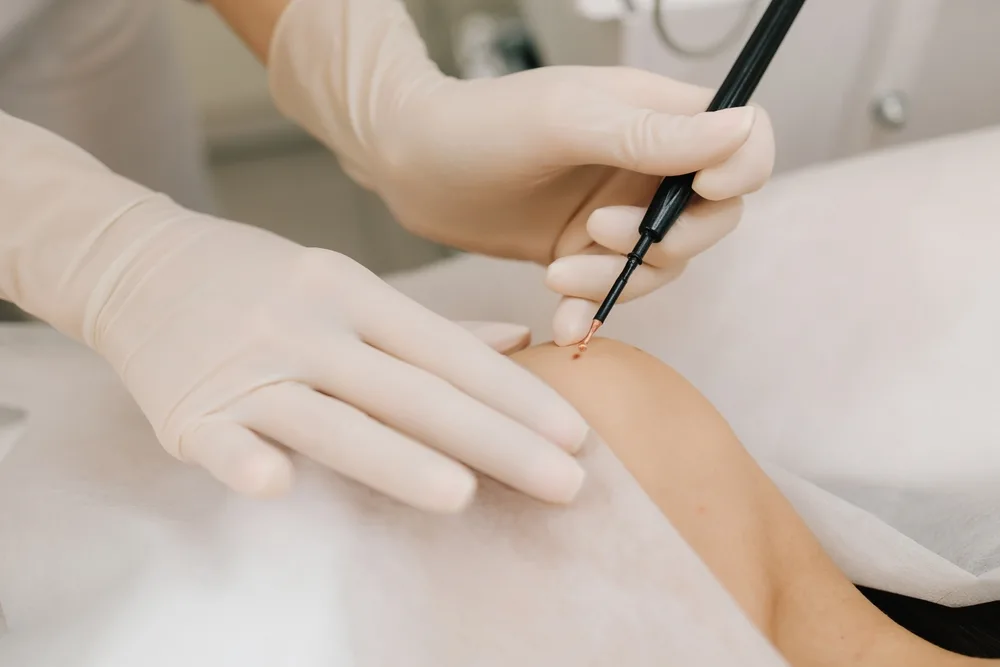
A skin growth can be small and still affect you every day. It may catch on clothing, become irritated by a bra strap, interfere with shaving, or sit in a visible area that makes you feel self-conscious. Other lesions deserve attention because they have changed in size, shape, color, texture, or behavior. In either situation, the first step is understanding what the lesion may be and whether surgical removal is the appropriate approach.
Lesion excision is a minor surgical procedure that removes a selected skin growth through an incision. Depending on the reason for treatment, the removed tissue may be sent to a pathology laboratory for examination under a microscope. An excisional biopsy removes the entire suspicious area when appropriate, while an incisional biopsy removes only part of a lesion for diagnosis. The correct approach depends on the lesion’s appearance, location, size, depth, and level of medical concern.
At Women’s LifeCenter Aesthetic Surgery and Medispa, Elysa Fisher, MD, FACS, approaches lesion removal with attention to both health and appearance. As a board-certified plastic surgeon, she considers how the lesion can be removed while protecting nearby structures and planning the resulting scar carefully. No excision can be truly scarless, but thoughtful incision placement, precise closure, and appropriate aftercare can help the area heal as discreetly as your anatomy allows.
Schedule a Complimentary Consultation
When a Small Growth Becomes a Persistent Concern
A lesion does not have to be painful or medically dangerous to become frustrating. A raised mole may repeatedly catch on a necklace, while a small growth near the waist may rub against clothing every day. A cyst can become noticeable beneath the skin, grow slowly, or become tender when inflamed. A visible lesion on the face, neck, chest, or hands may also draw your attention whenever you look in the mirror or see yourself in a photograph.
Our clients often describe adapting their routines around a growth before deciding to have it evaluated. They may avoid shaving over it, cover it with makeup, choose clothing that doesn’t rub against it, or worry whenever it becomes irritated. Others have been told that a lesion appears harmless but still want to understand whether removal is reasonable. These concerns deserve a thoughtful discussion, even when the eventual recommendation is observation rather than surgery.
However, a changing or unusual lesion should not be treated as a purely cosmetic problem before it has been medically evaluated. Some skin cancers can resemble an ordinary mole, sore, bump, or scaly patch, and diagnosis may require examination and biopsy. The American Academy of Dermatology notes that a biopsy is sometimes the only way to diagnose skin cancer and certain other skin diseases accurately.
What Is a Skin Lesion?
The term skin lesion describes an area of skin that looks or feels different from the surrounding tissue. It can refer to a mole, cyst, lipoma, skin tag, keratosis, scar-like growth, or another raised, flat, pigmented, or under-the-skin concern. Some lesions are present from childhood, while others appear after sun exposure, inflammation, injury, hormonal changes, or natural aging. The name “lesion” does not tell us whether the growth is harmless, precancerous, cancerous, or caused by another condition.
Many lesions are benign, which means they are not cancer. Even so, a benign lesion may become uncomfortable, inflamed, repeatedly injured, or cosmetically distracting. Other lesions need diagnostic attention because their appearance or recent behavior raises concern. A clinical evaluation helps determine whether the growth can be observed, removed in the office, biopsied, or referred for a different form of treatment.
Not every spot, mole, or growth needs to be removed or biopsied. Dermatologists use the lesion’s appearance, history, symptoms, and surrounding skin to decide when testing is appropriate. When a diagnosis cannot be made confidently through examination alone, removing a tissue sample allows a pathologist to inspect the cells under a microscope.
What Is Lesion Excision?
Lesion excision removes a skin growth by cutting around it and separating it from the surrounding tissue. The procedure may remove the full visible lesion along with a planned border of nearby skin, depending on whether the goal is cosmetic removal, diagnosis, or treatment of a known condition. The resulting opening is then closed in a way that supports healing and attempts to create the most favorable scar possible. Smaller, contained lesions can often be removed and closed during the same procedure.
An excision differs from treatments that destroy a lesion without removing a complete tissue specimen. Freezing, cautery, laser treatment, or superficial removal may be appropriate for selected benign growths, but they do not serve every diagnostic or reconstructive need. When the nature of a lesion is uncertain, preserving tissue for microscopic evaluation may be medically important. Dr. Fisher will explain whether complete excision, a different biopsy method, observation, or evaluation by a dermatologist is the more appropriate next step.
The depth of removal depends on the type of growth. A superficial lesion may involve only the upper layers of skin, while a cyst or lipoma can extend into the tissue beneath it. Deeper lesions may require a longer incision than their surface appearance suggests so the structure can be removed safely and the opening can be closed without excessive tension. That is one reason an accurate plan cannot be based on a photograph alone.
Lesions That May Be Evaluated for Excision
Lesion excision may be considered for a range of concerns, but suitability depends on examination and diagnosis. Some growths can be removed because they are irritated or cosmetically bothersome, while others are excised so the tissue can be evaluated. A lesion that appears suspicious may require dermatologic assessment, biopsy, or a specialized skin-cancer procedure before cosmetic reconstruction is planned.
Possible reasons to discuss excision include:
- A raised mole that repeatedly catches on clothing or jewelry
- A cyst that is noticeable, tender, or repeatedly inflamed
- A lipoma or other soft lump beneath the skin
- A benign-appearing growth in a highly visible area
- A lesion that interferes with shaving or personal care
- A previously biopsied growth that requires complete removal
- A lesion that has changed or developed concerning features
- A scarred or irregular area left after an earlier procedure
- A wound requiring repair after another physician removes a lesion
A new, changing, bleeding, painful, or nonhealing growth should be assessed promptly rather than treated as an ordinary cosmetic concern. Depending on the finding, the correct next step may involve a dermatologist, dermatopathologist, Mohs surgeon, oncologic specialist, or another physician. Skin cancer treatment is selected according to the diagnosis, location, margins, health history, and risk of recurrence.
Cosmetic Removal Versus Diagnostic Excision
Cosmetic lesion removal is performed primarily because a growth is bothersome or unwanted, even though it appears benign. Diagnostic excision is performed because the tissue needs to be examined to determine what it is. These goals sometimes overlap because a lesion can be removed for appearance or comfort and still be sent for pathology. The decision depends on the lesion and the clinical judgment of the treating physician.
Pathology can reveal whether a growth is benign, precancerous, cancerous, inflammatory, or caused by another condition. If the report identifies a condition requiring additional treatment, the next step may involve wider excision, dermatologic care, Mohs surgery, or another specialist. Removing a suspicious spot without a plan for pathology could delay an accurate diagnosis. The National Cancer Institute defines an excisional biopsy as removal of the entire abnormal area so it can be checked microscopically for signs of disease.
A benign result does not mean the original concern was unimportant. It gives you useful medical information while also allowing the treatment area to heal. Likewise, a concerning result does not mean the initial excision was unsuccessful. It means the pathology has provided the information needed to plan the safest next step.
Lesion Excision and Skin Cancer
Plastic surgeons can play an important role in removing selected skin cancers and repairing wounds left after cancer treatment. However, the priority is always complete and appropriate treatment of the disease. A small, contained lesion may be removed through standard excision, while another lesion may require wider margins, staged excision, or Mohs micrographic surgery to examine the edges more carefully.
Mohs surgery is often performed by a specially trained dermatologist and is particularly useful when preserving healthy tissue is important or when the lesion has a higher risk of recurrence. After the cancer is removed and the margins are cleared, a plastic surgeon may help repair the remaining wound, especially when it is large, deep, or located near the nose, lips, eyelids, ears, or another delicate structure. Reconstruction may involve direct closure, a local tissue flap, or a skin graft, depending on the size and location of the defect.
Dr. Fisher’s role will depend on your diagnosis and treatment needs. She may determine that an office excision is appropriate, or that evaluation by a dermatologist or Mohs surgeon should come first. The scar should never be prioritized over complete cancer treatment. Once the medical requirements are understood, reconstructive planning can focus on protecting function and achieving the most natural healing possible.
Your Consultation With Dr. Elysa Fisher
Your consultation begins with the history of the lesion. Dr. Fisher will ask when you first noticed it, whether it has grown or changed, and whether it becomes painful, inflamed, itchy, crusted, or irritated. She will also review any previous biopsy, imaging, treatment, infection, or attempted removal. Bringing pathology reports or records from another physician can help prevent unnecessary delay or repeated testing.
Dr. Fisher will examine the lesion and the surrounding skin while considering its size, depth, mobility, color, borders, location, and relationship to nearby nerves, muscles, eyelids, lips, or other structures. She will discuss whether excision appears appropriate and whether pathology or another specialist should be involved. The likely incision may be longer than the lesion itself because the wound must be shaped and closed in a controlled way. This planning helps distribute tension and may allow the scar to follow a natural skin line when the location permits.
Dr. Fisher has 42 years of medical experience and completed medical school, general surgery residency, and plastic surgery fellowship training at Northwestern Feinberg School of Medicine. She became board-certified in plastic surgery through the American Board of Plastic Surgery in 1992. Her practice philosophy emphasizes accessibility, clear information, and safe care throughout the treatment process.
Clients frequently describe Dr. Fisher as detailed, compassionate, and willing to answer their questions before and after treatment. They also describe the office as calm and welcoming, which can make even a small surgical procedure feel less intimidating. One recurring theme in their experiences is that the team pays attention to individual sensitivities and explains what to expect. That personal attention is especially valuable when someone is worried about both the diagnosis and the scar.
What Happens During Lesion Excision?
Many smaller lesion excisions can be performed with local anesthesia, which numbs the treatment area while you remain awake. A more involved lesion, deeper growth, sensitive location, or reconstructive procedure may require a different anesthesia plan. The skin is cleansed, the incision is carefully marked, and anesthetic is administered around the planned area. Minor office procedures such as selected mole or skin-lesion excisions are commonly categorized as procedures that can be performed under local anesthesia.
Dr. Fisher removes the lesion using the approach planned during the consultation. When tissue requires microscopic evaluation, it is preserved and sent to pathology rather than destroyed. Bleeding is controlled, and the wound is examined to determine the most appropriate closure. Depending on the depth, the incision may be closed in layers so the deeper sutures support the skin and reduce surface tension.
A simple closure brings the wound edges directly together. A more complex area may require rearranging nearby skin through a local flap, while a larger or difficult defect may occasionally require a graft or staged repair. These more advanced methods are generally reserved for wounds that cannot be closed safely or naturally through a simple straight-line repair. The recommended technique depends on preserving function, circulation, and surrounding facial or body contours.
Will Lesion Excision Leave a Scar?
Every surgical excision creates a scar. The goal is not to promise that the scar will disappear, but to place and close it as carefully as the location and diagnosis permit. The final scar is influenced by the lesion’s size and depth, the tension on the wound, skin type, genetics, infection, sun exposure, and the way your body heals. A small surface lesion can sometimes require a longer line than expected because a round opening must be reshaped before it can close smoothly.
Early scars may appear pink, red, firm, raised, or darker than the surrounding skin. They generally soften and fade over the following months, but maturation can continue for a year or longer. Some clients naturally form thick, widened, or dark scars despite careful surgery. A history of keloids or difficult healing should be discussed before the procedure.
The location also matters. A scar beside a natural crease may be easier to conceal than one crossing a highly visible, flat area. Scars near the eyelid, lip, nose, ear, or joint must also be planned with attention to movement and function. Dr. Fisher will explain the expected tradeoff between removing the lesion and creating a permanent incision before you decide to proceed.
Recovery and Wound Care
Recovery depends on the size, depth, and location of the excision. A small office procedure may cause mild soreness and swelling, while a deeper removal or reconstructive closure can require more activity restrictions and follow-up. Stitches may remain for several days or longer depending on the treatment area. You will receive instructions about cleansing, bandaging, bathing, exercise, and when to return for suture removal.
Keeping the healing site clean and protected is important. Dermatology wound-care guidance commonly recommends gentle cleansing, petroleum jelly, and a clean bandage, while avoiding unnecessary topical antibiotics unless the treating physician specifically recommends them. Moist wound care can support healing and reduce excessive dryness or crusting. Follow Dr. Fisher’s instructions, since the correct routine may differ according to the type of closure and location.
Exercise, stretching, or repetitive movement may pull on the incision and widen the scar. A lesion removed from the back, shoulder, chest, leg, or another high-movement area may therefore require more caution than one removed from a relatively still location. Sun protection also matters because ultraviolet exposure can cause a new scar to remain darker for longer. Dr. Fisher will explain when sunscreen, scar massage, silicone care, or another step may be introduced.
Risks and Important Considerations
Possible risks include bleeding, infection, delayed healing, changes in skin sensation, injury to nearby structures, an unfavorable scar, contour irregularity, wound separation, recurrence of the lesion, and the need for additional treatment. Anesthesia reactions and allergies to tape, sutures, adhesives, or topical products are also possible. When a lesion is cancerous, recurrence or spread of the disease remains a medical concern even after removal.
A lesion may also extend farther beneath the skin than expected or have borders that are difficult to define visually. Pathology may show that additional tissue needs to be removed, even when the visible growth appears to have been fully excised. This is not necessarily evidence of poor technique because microscopic cells can extend beyond what the eye can see. Further treatment should be guided by the diagnosis and margin findings.
Contact the office for increasing pain, spreading redness, warmth, pus, fever, persistent bleeding, wound separation, darkening skin, or another symptom identified in your aftercare instructions. Do not pull at stitches, repeatedly apply harsh antiseptics, or attempt to drain a swollen area yourself. Early communication allows Dr. Fisher to determine whether the healing response is expected or requires treatment.
Why Choose Dr. Elysa Fisher for Lesion Excision in Wilmette?
Lesion removal can look like a small procedure, but the planning behind it may influence the scar for years. A plastic surgeon considers not only how to remove the growth, but also how the incision follows the skin, how much tension will be created, and whether nearby structures could be distorted. This becomes particularly important on the face, neck, chest, hands, or another visible area.
Dr. Fisher combines decades of surgical experience with an approach centered on education and accessibility. She can explain whether a straightforward office excision appears appropriate, whether pathology should be involved, and whether the lesion requires another specialist before removal. She also considers the realistic appearance of the resulting scar rather than describing the procedure as scarless.
Women’s LifeCenter Aesthetic Surgery and Medispa was created as a welcoming place where clients can discuss health, appearance, and personal concerns without feeling rushed. A lesion may be medically minor but emotionally distracting, or it may create genuine worry about what it represents. Dr. Fisher’s role is to evaluate the concern honestly, help you understand the available options, and recommend the next step that best protects both your health and appearance.