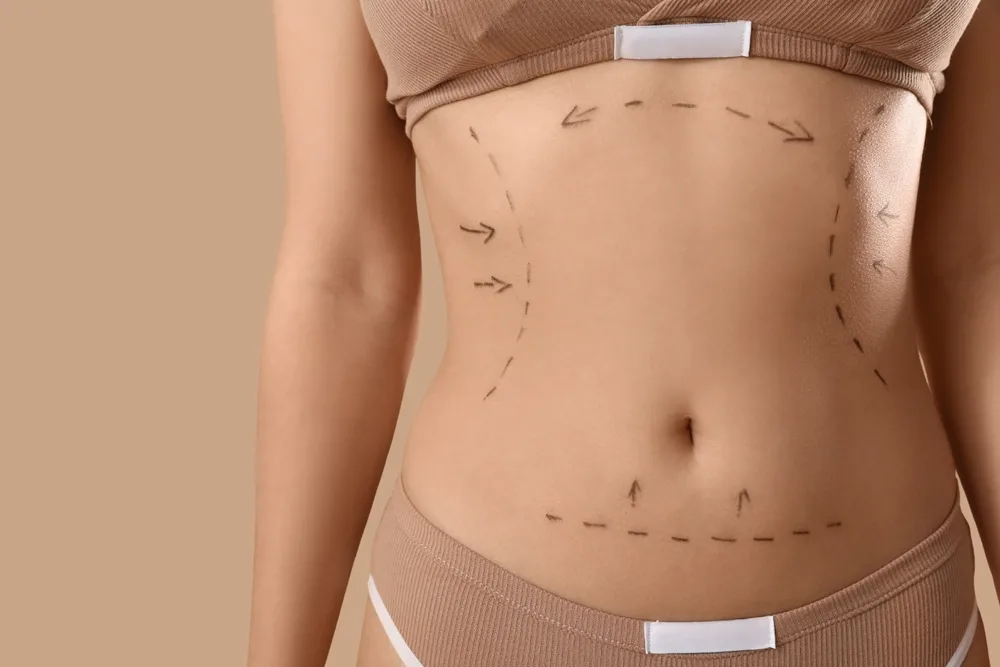
Pregnancy, significant weight loss, aging, and genetics can leave behind loose abdominal skin that exercise simply cannot tighten. You may be healthy, active, and close to your preferred weight, yet still feel frustrated by skin that folds over clothing or an abdomen that projects despite your efforts. An abdominoplasty, commonly known as a tummy tuck, can remove excess skin and improve weakened or separated abdominal muscles to create a smoother, firmer contour.
At Women’s LifeCenter Aesthetic Surgery and Medispa, tummy tuck surgery is never approached as a standard procedure performed the same way for everyone. Elysa Fisher, MD, FACS, evaluates your abdominal skin, fat distribution, muscle structure, medical history, lifestyle, and personal goals before recommending a plan. The goal is not to create someone else’s body. It is to help your abdomen look more balanced, feel more comfortable, and better reflect the work you have already put into caring for yourself.
Schedule a Complimentary Consultation
When Your Abdomen No Longer Reflects Your Effort
Many clients who visit us about tummy tuck surgery are not looking for a shortcut. In fact, they have often spent years eating carefully, exercising consistently, and maintaining a stable weight. The problem is that stretched skin and separated abdominal tissue cannot always contract through exercise, no matter how many crunches, planks, or fitness classes you complete.
Pregnancy can stretch the skin and connective tissue across the abdomen while also separating the muscles along the center of the abdominal wall. Weight loss can reduce the size of the body but leave behind skin that no longer has enough elasticity to fit the new shape. Aging can further reduce skin firmness, while genetics influence how readily the skin stretches and how well it contracts afterward.
These changes may affect more than the way your stomach looks in a mirror. Loose skin can gather above a waistband, make fitted clothing difficult to wear, or require you to size up even when the rest of the garment is too large. Some clients describe arranging every outfit around hiding their midsection, while others feel that the outside of their body no longer reflects how strong and healthy they have become.
A tummy tuck addresses structural concerns that diet and exercise cannot reliably change. It is not a weight-loss operation, nor is it intended to replace healthy habits. Instead, it removes selected excess skin and fat while allowing the surgeon to restore weakened or separated abdominal tissue when appropriate.
What Is Abdominoplasty?
Abdominoplasty is a body-contouring surgery designed to reshape the abdomen. During the procedure, excess skin is removed from the lower and middle abdomen, and remaining skin is repositioned to create a smoother contour. When the abdominal wall has become weakened or separated, it may also be tightened as part of the surgical plan.
A lower abdominal incision is generally placed where it can be covered by most underwear and swimsuits. Its length depends on how much skin must be removed and how far the laxity extends across the abdomen. A more significant amount of loose skin usually requires a longer incision, while a more limited concern may require less extensive correction.
In a full tummy tuck, the belly button usually remains attached to its original underlying stalk while the surrounding skin is repositioned. A new opening is then created so the belly button can appear naturally through the tightened abdominal skin. Dr. Fisher considers the position, shape, and surrounding contour of the navel because this small detail can have a significant effect on how natural the final abdomen appears.
Tummy tuck surgery may also be combined with liposuction when localized fat affects the waist or surrounding contours. However, adding liposuction is not automatically necessary or appropriate for every client. Dr. Fisher will explain whether skin removal, muscle repair, fat reduction, or a carefully planned combination is most likely to address the concern you actually see.
What Can a Tummy Tuck Improve?
A tummy tuck may help when loose skin and changes beneath the skin are responsible for an abdominal shape that does not respond to lifestyle changes. The procedure can create a flatter and smoother contour, but the exact improvement depends on your anatomy, the amount of tissue being treated, and how your body heals. It is important to enter surgery with realistic expectations rather than expecting a perfectly flat abdomen or a body that looks digitally edited.
Abdominoplasty may address:
- Loose or hanging skin after pregnancy
- Excess abdominal skin following significant weight loss
- A lower abdominal fold or overhang
- Separated or weakened abdominal muscles
- A persistent abdominal bulge that remains at a stable weight
- Localized fat removed as part of an individualized surgical plan
- Some stretch marks located within the skin being removed
- Difficulty fitting comfortably into pants, dresses, or swimwear
Stretch marks outside the area of skin removal generally remain, although their position may change when the skin is tightened. Likewise, a tummy tuck cannot prevent future weight changes or stop the natural aging process. Dr. Fisher will explain what is likely to improve, what may remain, and whether another procedure would be more appropriate for part of your concern.
Am I a Candidate for Tummy Tuck Surgery?
A suitable tummy tuck candidate is generally in good overall health, close to a stable and sustainable weight, and bothered by loose abdominal skin or weakened tissue. You should also be able to take the required time away from work, exercise, childcare, and other physical responsibilities. Because healing differs from person to person, your medical history and individual risk factors are just as important as your cosmetic goals.
You may be ready to discuss abdominoplasty when:
- Your weight has remained reasonably stable
- You have loose skin that cannot be tightened through exercise
- You understand that tummy tuck surgery leaves a permanent scar
- You are willing to follow postoperative activity restrictions
- You do not smoke, or you can stop nicotine use as medically directed
- You have realistic expectations about improvement
- You are not planning a pregnancy in the near future
- You have dependable help available during early recovery
A future pregnancy is still possible after a tummy tuck, but pregnancy may stretch the repaired muscles and skin again. For that reason, many people choose to wait until they have completed childbearing. Significant weight loss planned after surgery can also create new laxity, so it is usually better to reach a weight you can realistically maintain before proceeding.
Medical conditions that increase surgical or healing risks may affect whether surgery is appropriate. Smoking and nicotine use are especially important because nicotine reduces blood flow to healing tissue and increases the risk of wound complications. Dr. Fisher will review medications, supplements, prior abdominal surgery, pregnancies, weight changes, allergies, and relevant health conditions before determining whether a tummy tuck can be performed safely.
Your Consultation With Dr. Elysa Fisher
Your consultation is not a sales presentation or a quick decision based only on a photograph. It is a detailed conversation about what has changed, what bothers you, and how much improvement you hope to see. Dr. Fisher will examine the quality and location of excess skin, evaluate your abdominal wall, and consider whether fat around the abdomen or waist affects the overall contour.
This is also the time to discuss your daily life. A client with young children may need a different recovery plan than someone who lives alone or has a physically demanding job. Likewise, a person preparing for a wedding, vacation, or major life event needs an honest timeline that allows swelling to decrease and the body to heal without unnecessary pressure.
Clients frequently tell us that having their questions answered in detail helps surgery feel less intimidating. Dr. Fisher believes a surgeon should be accessible and should serve as a source of clear information, not simply recommend a procedure. She will explain the potential benefits, limitations, alternatives, recovery demands, and risks so you can decide whether surgery is right for you.
Tummy Tuck Versus Liposuction
Tummy tuck surgery and liposuction solve different problems. Liposuction removes localized fat through small incisions, but it does not remove a meaningful amount of loose skin or repair separated abdominal muscles. It may be a suitable option when skin elasticity is good and the main concern is a resistant pocket of fat.
A tummy tuck is more appropriate when stretched skin, an abdominal fold, or muscle weakness is responsible for the shape of the midsection. Removing fat alone from skin that is already loose may leave the skin looking even less supported. This is why selecting a procedure based only on which option sounds easier can lead to disappointment.
Some clients benefit from a combination of abdominoplasty and liposuction. In those cases, the tummy tuck addresses skin and muscle while liposuction refines selected areas of fat around the abdomen or waist. Dr. Fisher will recommend a combination only when each part has a clear purpose and can be performed appropriately for your health and anatomy.
What Happens During Tummy Tuck Surgery?
Abdominoplasty is generally performed under general anesthesia. Once the planned incision is made along the lower abdomen, the skin and underlying tissue are carefully lifted to provide access to the abdominal wall. If the muscles or supporting tissue have become weakened or separated, they can be brought together and reinforced.
Excess skin is then drawn downward and removed in a measured way. Dr. Fisher evaluates tension, symmetry, waist definition, and the relationship between the upper and lower abdomen before completing the closure. If a full abdominoplasty is performed, the belly button is brought through a newly created opening in the repositioned skin.
The incision is closed in layers, and dressings or a supportive garment may be applied. Temporary drains are sometimes used to prevent fluid from collecting beneath the skin, although the exact postoperative plan depends on the surgical technique and the individual. You will receive detailed instructions about incision care, medications, movement, sleeping position, garments, and symptoms that require a call to the office.
Tummy Tuck Recovery
Early recovery requires preparation, patience, and practical help. You will need someone to drive you home and stay with you during the initial period specified by your surgical team. Standing fully upright may feel difficult at first because the abdominal skin and internal repair feel tight, so clients often walk slightly bent forward during the earliest stage of healing.
Short, gentle walks are typically encouraged to support circulation, but lifting, strenuous exercise, and abdominal strain must be avoided. Parents of babies or young children should arrange for help because picking up a child can place too much force on the repair. People who work at a desk may return sooner than those whose jobs require lifting, bending, climbing, or extended physical activity.
Many clients need approximately two to three weeks before resuming lighter work and routine activities, although individual recovery can be shorter or longer. Strenuous activity is commonly restricted for at least four to six weeks, and exercise must be resumed gradually with the surgeon’s approval. Swelling continues to improve over several months, while the incision scar may keep softening and fading for a year or longer.
Recovery is not a straight line. You may feel stronger one day and more swollen or tired the next, especially after increasing your activity. Following Dr. Fisher’s instructions is more important than comparing your progress with another person’s online recovery timeline.
What Will My Tummy Tuck Scar Look Like?
A tummy tuck produces a permanent lower abdominal scar. Dr. Fisher plans the incision as low as the procedure safely allows, with the intention of placing it beneath common underwear and swimsuit lines. However, the length and final appearance depend on the amount of skin removed, your natural healing pattern, prior scars, and the tension placed on the incision.
At first, the scar may look firm, raised, dark, or pink. It generally changes over time as the tissue matures, although it will not disappear completely. Careful wound care, protection from sun exposure, avoidance of nicotine, and following activity restrictions can support healing.
Some people naturally develop thicker, wider, darker, or more noticeable scars despite careful surgery and aftercare. Dr. Fisher will review any personal or family history of difficult scarring during your consultation. The improvement in abdominal contour must feel worthwhile to you when balanced against the reality of a lasting incision.
How Long Do Tummy Tuck Results Last?
The skin removed during abdominoplasty does not grow back, and repaired abdominal tissue can remain firmer for many years. However, the body continues to age, and the remaining skin can stretch with significant weight gain or pregnancy. Maintaining a stable weight and an active lifestyle helps preserve the new contour.
You will notice a change soon after surgery, but swelling initially hides the final shape. The abdomen gradually settles as inflammation decreases and the tissues adapt to their new position. It can take several months to appreciate the more complete result, and the scar will continue evolving long after the surrounding swelling has resolved.
The best result is not always the smallest possible waist or the tightest possible skin. A successful outcome should look balanced with your chest, hips, torso, and natural frame. Dr. Fisher’s plan is designed around proportion, safety, and a result that belongs to your body.
Why Choose Dr. Elysa Fisher for Abdominoplasty in Wilmette?
Elysa Fisher, MD, FACS, completed her undergraduate, graduate, and postgraduate education at Northwestern University. She has been board-certified in plastic and reconstructive surgery since 1992 and has spent decades providing surgical and non-surgical aesthetic care. Her background gives her the technical experience required for body-contouring surgery, but her philosophy is equally important.
Dr. Fisher created Women’s LifeCenter Aesthetic Surgery and Medispa around the belief that women deserve access to information, options, healing, and support in one welcoming place. She understands that the decision to have a tummy tuck is rarely just about wanting a flatter stomach. It may represent the end of a long weight-loss journey, recovery from changes after pregnancy, relief from years of hiding the abdomen, or a desire to feel comfortable in clothing again.
Clients describe Dr. Fisher and her staff as compassionate, thorough, professional, and willing to take time with their questions. That feeling of being heard matters when you are considering a procedure that requires a permanent scar and a meaningful recovery. At Women’s LifeCenter, the purpose of your consultation is to help you make an informed choice, even when the right choice is to wait or consider another option.