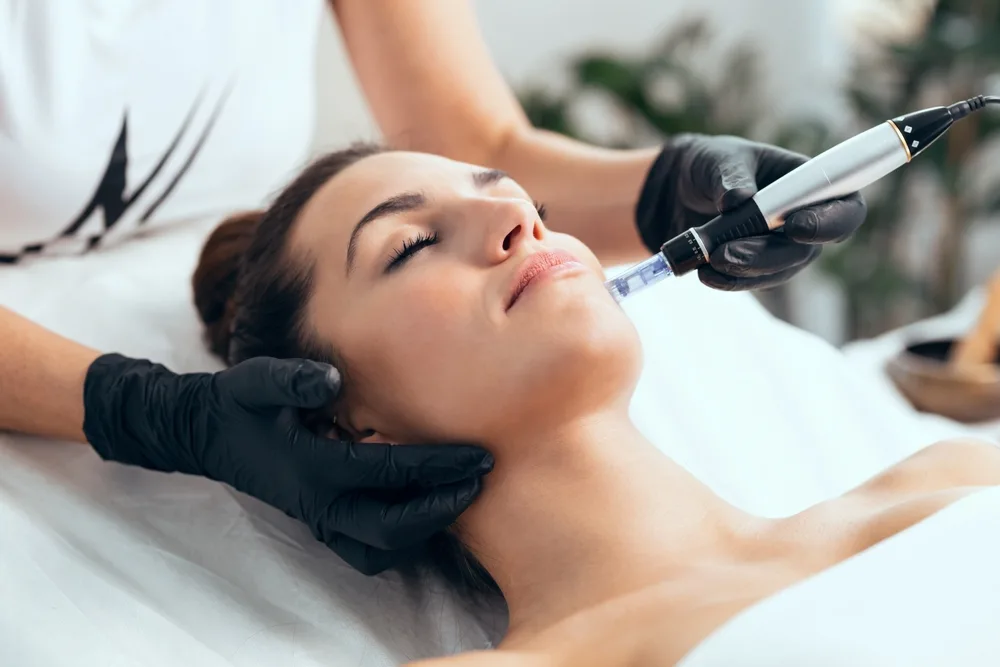
Skin can carry the visible history of acne, sun exposure, stress, hormonal changes, and aging long after the original concern has passed. You may notice rough texture in bright lighting, acne scars that makeup cannot fully soften, or fine lines that remain despite a careful skincare routine. Enlarged-looking pores, uneven tone, and a general loss of smoothness can also make the skin appear less rested than you feel. Microneedling offers a way to encourage gradual skin renewal without removing large areas of the surface or dramatically changing your natural features.
Microneedling is a minimally invasive treatment that creates precise, controlled punctures in the skin. These microchannels trigger the body’s natural healing response, which includes the production and organization of collagen and elastin. As the skin remodels over time, selected scars, wrinkles, and textural irregularities may become less noticeable. The FDA has authorized certain microneedling devices for improving the appearance of facial acne scars, facial wrinkles, and abdominal scars in adults age 22 and older.
At Women’s LifeCenter Aesthetic Surgery and Medispa, microneedling is planned around your skin rather than performed as a standard treatment at one setting or depth. Elysa Fisher, MD, FACS, and the treatment team consider your skin tone, sensitivity, scar pattern, current products, healing history, and the amount of recovery you can accommodate. The goal is not to create the strongest possible reaction. It is to produce controlled renewal while protecting the health, comfort, and natural character of your skin.
Schedule a Complimentary Consultation
When Skincare Alone Cannot Reach the Concern
A good skincare routine can protect the skin, improve hydration, and support a more even surface. However, a cream cannot always change the deeper structure of an acne scar or reverse every visible effect of collagen loss. You may be using professional products consistently and still notice indentations, roughness, or fine lines under certain lighting. That does not mean your routine has failed, but it may mean the concern requires a treatment that works through a different process.
Our clients often describe acne scars as more personal than other people realize. A client may feel confident in most situations yet avoid close photographs, bright overhead lighting, or makeup that settles unevenly into depressed areas. Another may be less concerned about individual scars and more frustrated by an overall texture that makes the skin appear older or less healthy. Microneedling can be considered when the goal is gradual improvement rather than covering the concern with more makeup or adding volume where it does not belong.
The treatment may also appeal to clients who want visible skin renewal without the recovery associated with a deeper resurfacing procedure. Redness and sensitivity are expected, but many people can return to ordinary routines relatively quickly. Results do not appear overnight because the treatment relies on the body’s own remodeling process. That slower development can produce an improvement that looks like healthier skin rather than a sudden change in facial shape.
What Is Microneedling?
Microneedling, also known as collagen induction therapy or percutaneous collagen induction, uses a device fitted with very fine needles. The needles move into and out of the skin at a controlled depth, creating many small channels across the treatment area. These controlled injuries signal the body to begin a repair response and form new structural components within the skin. The process may improve texture and soften selected scars and wrinkles as collagen remodeling continues.
The needle depth and number of passes are adjusted according to the area and concern. Delicate skin near the mouth does not necessarily require the same settings as a deeper acne scar along the cheek. Treating every part of the face at the maximum depth would increase inflammation without automatically creating a better result. A thoughtful procedure uses enough stimulation to support improvement while avoiding unnecessary trauma.
Women’s LifeCenter has long offered microneedling as an in-office option for improving skin texture, acne scars, and wrinkles with limited downtime. The practice’s existing philosophy focuses on helping clients understand their choices instead of assuming that one procedure is right for every concern. That individualized approach is especially important with microneedling because treatment intensity, number of sessions, and aftercare should all reflect the condition of the skin.
What Can Microneedling Improve?
Microneedling is often chosen for concerns involving texture and collagen support. Some clients want to soften acne scars, while others want to address early wrinkles or the roughness that becomes more visible as the skin ages. The degree of improvement varies because scar depth, skin quality, age, sun exposure, and healing response differ from one person to another. A consultation helps determine whether microneedling can meaningfully improve the concern or whether another treatment would be more appropriate.
Treatment may be considered for:
- Depressed or uneven acne scars
- Fine lines and early wrinkles
- Rough or uneven skin texture
- Enlarged-looking pores
- Selected areas of uneven tone
- Certain surgical or injury scars
- Abdominal scars
- Stretch marks in appropriate treatment areas
- Dull skin that lacks visible smoothness
- Gradual facial skin rejuvenation
The American Academy of Dermatology also identifies dark spots, melasma, sagging skin, surgical scars, injury scars, stretch marks, and uneven tone among concerns for which microneedling may be used. However, that does not mean every person with one of these concerns is automatically a candidate. Pigmentation can worsen when inflammation is not managed carefully, and some scar types require a different or combined approach. Dr. Fisher will explain what is realistic for your skin rather than applying the same list of promises to every client.
Microneedling for Acne Scars
Acne scars form when inflammation damages the skin deeply enough to alter the way collagen repairs the area. Some scars create shallow rolling depressions, while others appear narrow, deep, or sharply edged. Microneedling can stimulate remodeling around certain depressed scars, helping their edges and depth become less noticeable over a series of treatments. It does not erase every scar, and different scar patterns may respond at different rates.
Active acne should usually be controlled before scar-focused microneedling begins. Passing a device over inflamed, painful, or pus-filled lesions may increase irritation and spread bacteria across the skin. The American Society for Dermatologic Surgery notes that clinicians generally prefer to treat acne scarring after active acne is under control. Your treatment plan may therefore begin with calming breakouts and building a stable routine before addressing the scars they left behind.
Clients sometimes expect one aggressive treatment to remove years of scarring. In reality, acne scar improvement generally develops through a series because each session creates another controlled remodeling cycle. The AAD describes treatment plans for acne scars that may involve three to five sessions performed several weeks apart, although your schedule must be based on the device, scar pattern, healing, and clinical recommendation. Final improvement continues developing for months as the skin produces and reorganizes collagen.
Fine Lines, Pores, and Uneven Texture
As collagen and elastin change with age, the skin may become thinner, less resilient, and more likely to hold fine creases. Sun exposure can add roughness and uneven tone, while pores may appear more visible when the surrounding skin loses support. Microneedling does not close pores because pores are normal openings within the skin. However, improving the surrounding texture may make them appear less noticeable.
Fine lines created partly by skin quality may soften as remodeling develops. Lines caused primarily by repeated muscle movement may require a neuromodulator such as Xeomin, while deeper folds related to volume loss may need a different approach. Microneedling works within the skin rather than relaxing muscles or adding facial volume. Dr. Fisher can help separate these causes so one procedure is not expected to perform the work of three different treatments.
Clients often appreciate that microneedling does not change facial shape. The cheeks do not become fuller, and expressions are not temporarily weakened. Instead, the treatment focuses on the surface and supporting structure of the skin. This can make it a practical option for someone who wants gradual refinement while still looking entirely like herself.
Microneedling With Exosomes
For selected clients, microneedling may be discussed alongside a topical product described as containing exosomes or extracellular vesicles. Exosomes are tiny particles released by cells that carry proteins, lipids, and other biological signals involved in communication between cells. Early research has explored whether exosome-containing products used with procedures such as microneedling may support hydration, texture, pigmentation, collagen activity, or visible recovery. Recent clinical reviews describe promising findings, but they also emphasize that studies use different products, sources, treatment methods, and measurements, which makes broad conclusions difficult.
Small clinical studies have reported improvements when exosome-containing solutions were paired with microneedling for facial aging. However, these studies do not prove that every product sold as an exosome treatment is safe, equivalent, or capable of producing the same result. Product sourcing, purification, sterility, concentration, storage, and manufacturing can vary substantially. A promising ingredient category should not be treated as a guarantee of faster healing or superior rejuvenation.
It is also important to understand the current regulatory status. The FDA states that there are presently no FDA-approved exosome products, and it has warned consumers about unapproved products from human cells or tissues whose quality, purity, safety, and potency have not been verified. In addition, FDA-cleared microneedling devices are not cleared specifically to deliver cosmetics, topical medications, drugs, vitamin solutions, blood products, or exosome products into the skin. Any exosome-based adjunct should therefore be discussed transparently as a separate product and not described as an FDA-approved regenerative treatment.
When exosome-based topical care is considered at Women’s LifeCenter, the conversation should include the exact product, its source, how it is manufactured, how it will be applied, what evidence supports it, and what remains uncertain. It should not be called stem cell therapy, and it should not be promoted as a proven way to reverse aging or regenerate completely new skin. Standard microneedling can still create collagen remodeling without an exosome add-on. The additional product is optional and should be chosen only when its expected value and uncertainties have been clearly explained.
Who Is a Candidate for Microneedling?
Microneedling may be appropriate for adults who want gradual improvement in scars, texture, or fine lines and who can follow careful aftercare. It can be used across a wide range of skin tones, although treatment settings and post-procedure care still need to be personalized. A suitable client should understand that improvement usually requires time and may require several sessions. The goal should be softer texture and less visible irregularity rather than perfectly smooth or poreless skin.
You may be ready to discuss microneedling if:
- Acne scars remain after active breakouts are controlled
- Fine lines or rough texture bother you
- Your skin appears uneven under makeup or bright lighting
- You want gradual collagen remodeling without facial volume
- You can accommodate temporary redness and sensitivity
- You are willing to follow sun-protection instructions
- You understand that a series may be needed
- Your expectations focus on improvement rather than complete removal
Microneedling may need to be postponed or avoided when the skin has an active infection, open wound, painful inflammatory acne, recent significant sun exposure, or an untreated condition in the planned area. A history of keloids, poor wound healing, immune suppression, skin cancer treatment, radiation, bleeding concerns, or certain medications can also affect candidacy. Pregnancy, breastfeeding, recent procedures, cold sores, and prescription skincare should be discussed before treatment.
Your Consultation at Women’s LifeCenter
Your consultation begins with what you see and how long it has bothered you. Dr. Fisher and the treatment team will ask about acne history, pigmentation, sensitivity, past procedures, cold sores, medications, skincare products, and previous reactions. Your face will be examined in different lighting because texture and scar patterns can appear very different under direct and angled light. This allows the treatment plan to focus on the areas that are genuinely likely to respond.
The consultation also helps distinguish similar-looking concerns. A dark mark left after acne is different from a depressed acne scar, even though both may be described as scarring. A line caused by muscle movement behaves differently from a fine crease caused mainly by skin aging. Identifying the structure behind the concern prevents microneedling from being recommended simply because it is available.
Dr. Fisher has 42 years of medical experience and completed medical school, general surgery residency, and plastic surgery fellowship training at Northwestern Feinberg School of Medicine. She became board-certified in plastic surgery through the American Board of Plastic Surgery in 1992. Her practice brings surgical, non-surgical, skincare, and wellness services together so a client can understand several possible approaches rather than being limited to one treatment category.
What Happens During Microneedling?
Your skin is cleansed carefully before treatment, and a topical anesthetic may be applied to reduce discomfort. The device is then moved across the planned area while the needle depth and speed are controlled according to the skin and concern. You may feel vibration, pressure, scratching, or brief pinching, especially in areas where the skin lies close to bone. An office microneedling session commonly takes around 30 minutes for treatment, although the full appointment may be longer because of numbing, preparation, photography, and aftercare.
The skin usually becomes red during the procedure, and pinpoint bleeding may occur depending on treatment depth. These responses can be expected with medical microneedling, but more bleeding does not automatically mean a better treatment. Dr. Fisher’s team will monitor the skin’s reaction and adjust the technique rather than forcing every area to respond identically. A soothing post-treatment product may be applied afterward according to the specific plan.
When an exosome-based topical product is included, its use will be explained separately before treatment. You should know the name of the product and whether it is being placed on the surface after microneedling or used in another manner. The presence of microchannels may increase exposure to anything applied to the treated skin, which is why sterility, ingredients, and the possibility of irritation matter. The FDA specifically notes that microneedling devices are not authorized for delivering topical products into the skin.
Microneedling Recovery and Aftercare
Immediately after treatment, the skin may look red or darker and feel warm, tight, tender, or mildly swollen. Many clients compare the sensation to a sunburn, although the intensity depends on depth, treatment area, and individual sensitivity. Flaking, dryness, or a rough texture may develop as the surface recovers. These reactions often improve within several days, although redness or sensitivity can last up to a week in some clients.
Aftercare should be simple and protective. You may be instructed to use a gentle cleanser, approved moisturizer, and broad-spectrum sunscreen while temporarily avoiding retinoids, exfoliating acids, scrubs, fragranced products, and other active ingredients. Makeup is commonly delayed for at least 24 hours, but you should follow the instructions provided for your exact procedure. Picking, peeling, or scrubbing the treated skin can increase irritation and the risk of discoloration or scarring.
Sun protection is essential because recently treated skin may be more vulnerable to irritation and pigment changes. Avoid unnecessary sun exposure, use the recommended sunscreen, and consider a hat when outdoors. You may also need to postpone strenuous exercise, hot yoga, saunas, swimming, and other activities that expose the skin to heat, sweat, or bacteria. Dr. Fisher’s instructions should take priority over general advice found online.
When Will You See Results?
Microneedling results develop gradually because collagen remodeling takes time. You may notice that the skin looks smoother or more refreshed after the early redness and dryness resolve, but deeper changes continue over the following weeks and months. Acne scars and established texture concerns usually require more patience than a goal such as general brightness. The AAD notes that improvement may begin within weeks, while fuller results can take several months.
Many clients benefit from a treatment series rather than one isolated appointment. The number and spacing of sessions depend on the concern, treatment depth, skin response, and device protocol. The American Society for Dermatologic Surgery notes that at least three monthly treatments are often used for optimal results, while other plans may use different timing. More frequent treatment is not automatically better because the skin needs enough time to complete each healing cycle.
Results are not permanent because the skin continues aging and losing collagen. Sun exposure, smoking, inflammation, hormones, and daily habits can influence how the improvement lasts. Maintenance microneedling may be discussed after the original series, but ongoing treatment should be based on your skin rather than an automatic schedule. Consistent sunscreen and a practical home routine help protect the progress between appointments.
Risks and Possible Side Effects
Microneedling is minimally invasive, but it is still a medical skin procedure with possible complications. Common temporary effects include redness, swelling, tenderness, dryness, peeling, itching, and pinpoint bleeding. Less common problems may include bruising, infection, prolonged inflammation, reactivation of cold sores, persistent discoloration, allergic reaction to a topical product, and scarring. A result may also be less noticeable than expected, particularly when the scar type or concern is not well suited to treatment.
Infection control is critical because the procedure creates openings in the skin. A microneedling cartridge should never be reused or used on more than one client, even if it appears clean. The FDA warns that reuse can transfer infectious agents and advises clients to ask whether a new cartridge is used for each treatment. Proper cleansing, sterile single-use components, and a medical setting help reduce avoidable risk.
At-home rollers and pens do not offer the same control or medical screening as professional treatment. Pressing too hard, treating active acne, reusing a device, or applying unsuitable products can lead to irritation, infection, scarring, or lasting pigment changes. At-home use may also spread warts, herpes, or other viruses across the skin. The AAD recommends treating microneedling as a medical procedure rather than assuming that deeper needling is a harmless extension of an ordinary skincare routine.
Contact the office if you develop increasing pain, spreading redness, warmth, pus, fever, blisters, severe swelling, or a reaction that continues worsening instead of improving. A history of cold sores should be disclosed before treatment because skin procedures can reactivate herpes in some clients. Early communication allows the treatment team to determine whether a reaction is expected or needs medical care. Do not attempt to treat a significant reaction by repeatedly adding new products to already irritated skin.
Why Choose Women’s LifeCenter for Microneedling in Wilmette?
Microneedling may appear simple, but good treatment depends on deciding who should receive it, how deeply each area should be treated, and which products can be used safely afterward. Dr. Fisher brings the perspective of a board-certified plastic surgeon who understands skin aging, facial anatomy, scarring, and the difference between concerns that need surface renewal, injectables, or surgery. That broader perspective helps keep the recommendation focused on the problem rather than the popularity of the treatment.
Women’s LifeCenter Aesthetic Surgery and Medispa was created as a supportive environment where women can understand their options through different stages of life. Clients describe the practice as calm, welcoming, detailed, and attentive to individual sensitivities. They also value having their questions answered rather than feeling rushed through an appointment. That experience matters when treatment involves visible recovery and gradual results rather than an instant transformation.
The goal is not to promise flawless skin. It is to determine whether microneedling can make the concern less visible, build a treatment schedule your skin can tolerate, and support the result with appropriate home care. When an exosome-based adjunct is discussed, the same honest approach applies. You should understand the emerging research, the lack of FDA-approved exosome products, the product being considered, and the fact that microneedling itself remains the primary treatment.