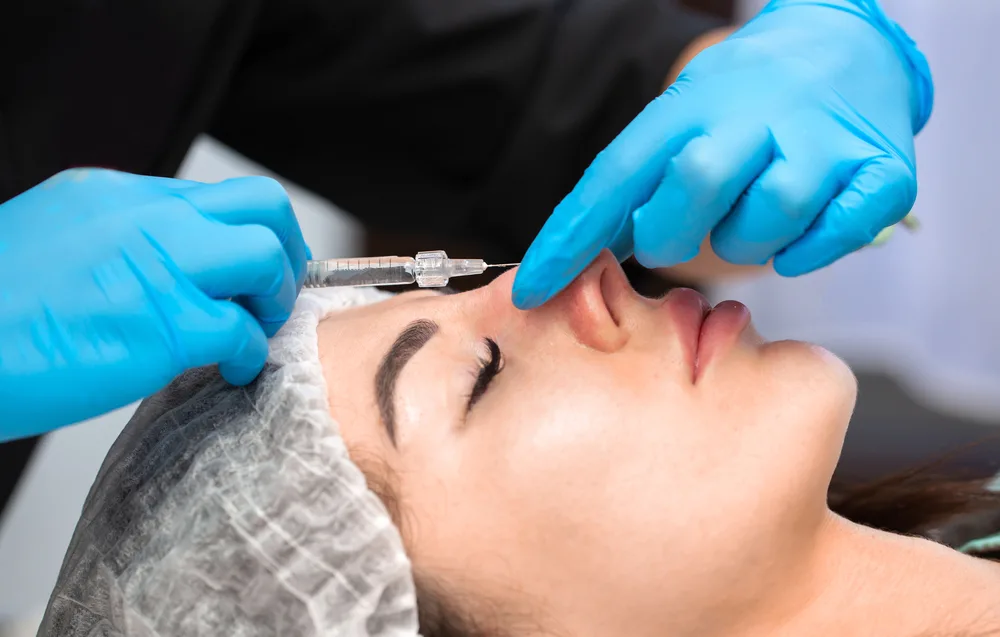
The nose sits at the center of the face, so even a small irregularity can influence how the entire profile feels. A slight bump along the bridge may catch your eye in photographs, while a shallow area can make the nose appear less straight from one angle. You may not want a dramatic transformation, general anesthesia, or the recovery involved with surgery. You may simply want a subtle adjustment that brings the nose into better balance with your other features.
Non-surgical rhinoplasty, sometimes called a liquid rhinoplasty or liquid nose job, uses carefully placed dermal filler to modify selected contours of the nose without surgery. The treatment may camouflage a small bridge hump, smooth an indentation, improve the appearance of mild asymmetry, or add support in an area that looks flat. However, because filler adds volume rather than removing bone, cartilage, or skin, it cannot physically make the nose smaller. It also cannot correct a deviated septum or improve nasal breathing.
At Women’s LifeCenter Aesthetic Surgery and Medispa, your treatment begins with a detailed evaluation by Elysa Fisher, MD, FACS. Dr. Fisher considers the nose from the front, profile, and angled views, but she also studies how it relates to the chin, lips, cheeks, and overall facial proportions. This broader perspective is important because a nose that feels prominent in isolation may look balanced when the full face is considered. The goal is not to create a trendy or standardized nose, but to determine whether a conservative change can help you feel more comfortable while preserving the features that make you recognizable.
Schedule a Complimentary Consultation
A Small Change Can Rebalance the Entire Profile
Many clients are not seeking a completely different nose. Instead, they describe one detail that seems to dominate photographs or makes them avoid a certain angle. A small hump may interrupt the line of the bridge, a shallow area may create the appearance of a dip, or the tip may seem less supported than the rest of the nose. Because the nose occupies such a central position, correcting a few millimeters of contour can sometimes improve the balance of the entire profile.
The change is created through addition, not reduction. For example, filler may be placed above and below a small dorsal hump to create the appearance of a smoother bridge. This can make the profile look straighter, even though the original hump has not been removed. The tradeoff is that the nose becomes slightly fuller because volume has been added around the irregularity.
That distinction matters when setting expectations. Someone who wants a smaller nose, narrower nasal bones, reduced nostril size, or major tip refinement will probably not achieve that goal with filler. In those situations, surgical rhinoplasty may offer a more appropriate path because surgery can remove, reshape, or reposition the underlying structures. A careful consultation protects you from choosing a simpler treatment that cannot produce the change you actually want.
What Is a Non-Surgical Rhinoplasty?
A non-surgical rhinoplasty is an injectable treatment that uses dermal filler to reshape selected parts of the nose. Rather than making incisions or modifying the nasal bones and cartilage, the provider places small amounts of filler at carefully chosen points. The added volume can create smoother transitions between areas, improve selected irregularities, and make the bridge or tip appear more balanced. Results are generally visible shortly after treatment, although swelling can temporarily affect the early appearance.
Hyaluronic acid fillers are commonly used for this type of treatment because they provide temporary volume and can be dissolved with hyaluronidase when medically appropriate. However, the exact product, amount, and placement must be selected for the individual rather than assumed in advance. Women’s LifeCenter currently provides a range of injectable treatments, including hyaluronic acid filler options, but Dr. Fisher will determine whether a particular product is suitable for the nasal area.
It is also important to understand that injecting dermal filler into the nose is an off-label use. The FDA has approved dermal fillers for certain facial wrinkles and areas of volume loss, but it has not approved filler injection into the nose. Dr. Fisher can explain what off-label treatment means, why it may be considered, what alternatives exist, and which risks must be understood before you decide to proceed.
What Can Non-Surgical Rhinoplasty Improve?
The best uses for non-surgical rhinoplasty involve modest contour concerns that can be improved by adding support or creating a smoother line. It can be especially useful when the underlying shape is generally acceptable but one small area disrupts the appearance. The treatment does not replace surgical rhinoplasty, and it should not be presented as though the two procedures produce identical results. Each option works through a different process and solves a different range of problems.
Non-surgical rhinoplasty may help improve the appearance of:
- A small bump along the nasal bridge
- A shallow area or indentation
- Mild contour asymmetry
- A bridge that appears slightly uneven
- Selected irregularities after previous nasal surgery
- A tip that may benefit from subtle support
- A profile that would look more balanced with a smoother bridge
- Minor differences between the right and left sides
Filler may also be considered for small irregularities following a previous surgical rhinoplasty, but these cases require additional caution. Surgery can alter the normal blood supply and create scar tissue, which may affect injection planning and complication risk. A complete history of prior nasal surgery, trauma, injections, and complications must be discussed before treatment.
What Non-Surgical Rhinoplasty Cannot Do
The word rhinoplasty can create the impression that filler offers a non-surgical version of every surgical correction. It does not. Filler cannot remove a dorsal hump, narrow wide nasal bones, reduce nostril width, or shorten a large nose. It creates an optical improvement by adding volume around an area, which means the nose may appear straighter but will not become physically smaller.
Non-surgical rhinoplasty also cannot correct internal breathing problems. A deviated septum, nasal valve collapse, enlarged internal structures, or other causes of airway obstruction require a functional medical evaluation. Filler placed on the outside of the nose does not repair those structures. Anyone experiencing difficulty breathing, persistent congestion, sleep disruption, or symptoms after nasal trauma should discuss those concerns with the appropriate medical specialist.
There are also limits to how much filler should be placed. Adding more product does not necessarily create a better or more refined result, and excessive volume can make the nose look wider or heavier. A conservative approach is especially important because the nose has a complex blood supply and limited space for swelling or added material. The goal should be the smallest effective adjustment rather than attempting to force filler to accomplish what requires surgery.
Are You a Candidate for a Liquid Rhinoplasty?
A suitable candidate generally wants a subtle, temporary contour change and understands that the treatment works by adding volume. You may be a reasonable candidate when the main concern is a small hump, mild indentation, limited asymmetry, or another feature that can be camouflaged rather than removed. You should also be comfortable with maintenance treatments because the result will gradually diminish as the filler is absorbed.
You may be ready to discuss non-surgical rhinoplasty if:
- You want modest refinement rather than a major change
- Your concern can be improved by adding volume
- You do not need the nose made substantially smaller
- You are not seeking correction of a breathing problem
- You understand that the results are temporary
- You are willing to accept the risks of nasal filler
- You can follow the recommended preparation and aftercare
- You have realistic expectations about symmetry and improvement
Medical history also affects candidacy. Dr. Fisher will need to know about allergies, autoimmune conditions, bleeding problems, current medications, pregnancy, breastfeeding, infections, cold sores, prior filler, previous rhinoplasty, nasal trauma, and past reactions to injectable products. Treatment may need to be postponed when the skin is irritated, infected, or actively inflamed. It may also be inappropriate when the desired result cannot be created safely through filler.
Your Consultation With Dr. Elysa Fisher
The consultation begins with what you see and why it matters to you. Some clients have disliked the same small profile feature since adolescence, while others notice a change more recently as the face loses volume and its proportions shift with age. Dr. Fisher will ask what you hope to change, which angles bother you, and whether you are looking for a temporary refinement or considering surgery in the future. This conversation helps separate a realistic filler goal from a request that requires structural surgery.
Dr. Fisher will then study the nose in relation to the entire face. The chin is particularly important because a smaller or retruded chin can make the nose appear more prominent, even when the nasal size itself is proportionate. Likewise, cheek volume, lip projection, facial width, and forehead shape can influence how the profile is perceived. Treatment should not begin until the feature causing the imbalance has been identified.
Your nose will also be evaluated for skin thickness, previous filler, scar tissue, asymmetry, bridge shape, tip support, and signs of prior trauma or surgery. Dr. Fisher will explain where filler might be placed, what change that placement could create, and whether the added volume may make another part of the nose appear wider or fuller. She will also discuss the limitations and serious risks rather than describing the treatment as a simple beauty appointment.
Dr. Fisher completed her undergraduate, graduate, and postgraduate education at Northwestern University and has been board-certified in plastic and reconstructive surgery since 1992. Her practice philosophy emphasizes accessibility, education, and helping clients understand both surgical and non-surgical choices. That perspective is particularly valuable when deciding whether filler is genuinely the best option or merely the least intimidating one.
What Happens During the Treatment?
Before treatment, standardized photographs may be taken from several angles so the starting shape can be documented. The skin is carefully cleansed, and the planned treatment points are identified based on the examination. The exact comfort measures vary according to the product and treatment plan. You will remain awake, which allows Dr. Fisher to assess the developing contour as the filler is placed.
Small amounts of filler are introduced gradually rather than attempting to create the entire change with one large injection. Dr. Fisher will evaluate the bridge, tip, profile, and front view throughout the process. Because small amounts can influence the way light travels across the nose, careful placement is more important than using a large volume. The treatment should stop when the planned improvement has been achieved, not when an entire syringe has been used.
You may see an immediate difference, although swelling can exaggerate or hide some details. The nose may feel tender, firm, or unfamiliar during the first few days. A final judgment should wait until early swelling has settled. Follow-up may be recommended so the result can be evaluated after the tissues have calmed.
Is Non-Surgical Rhinoplasty Safe?
Non-surgical rhinoplasty is minimally invasive, but that does not mean it is risk-free. The nose is considered one of the highest-risk areas for dermal filler because blood vessels in and around the nose connect with vessels supplying the skin and eyes. Unintentional injection into a vessel can block blood flow and may lead to tissue injury, skin necrosis, visual changes, blindness, or stroke. These complications are uncommon, but they can be permanent and require immediate recognition and treatment.
Other possible effects include swelling, bruising, tenderness, redness, asymmetry, infection, lumps, nodules, filler migration, discoloration, or an unsatisfactory contour. Some problems appear immediately, while others may develop weeks, months, or even years later. A 2025 review described both common reactions and rare severe complications, including vascular occlusion, tissue ischemia, necrosis, and visual injury.
The seriousness of these risks is one reason to choose a physician with detailed knowledge of facial anatomy and experience evaluating both surgical and non-surgical options. Clients should understand the treatment plan, filler type, emergency protocol, and symptoms that require an immediate call. Severe pain, blanching, unusual discoloration, a netlike skin pattern, worsening tenderness, or any visual disturbance should never be ignored. Treatment should take place in a medical setting prepared to recognize and respond to complications.
Recovery and Aftercare
Most clients experience some degree of temporary swelling, tenderness, redness, or bruising after treatment. Because the nose sits in the center of the face, even mild swelling may feel noticeable to you, although it may not be obvious to others. The area should be treated gently while the early response settles. You will receive specific instructions based on the product used and the details of your treatment.
You may be advised to avoid pressing, rubbing, massaging, or placing unnecessary pressure on the nose unless Dr. Fisher specifically instructs otherwise. Glasses, sunglasses, sleep masks, or protective equipment may need to be positioned carefully so they do not press directly on a newly treated area. Strenuous exercise, excessive heat, alcohol, and certain medications or supplements may also be restricted for a period based on your medical history. Do not stop a prescribed medication unless the clinician who manages it says it is safe to do so.
Photographs taken immediately after treatment may not represent the settled result. Swelling can create temporary differences between the two sides, and bruising may alter how the contours appear under different lighting. Give the tissues time to settle before deciding that more filler is needed. Adding product too quickly can lead to unnecessary volume and a less natural appearance.
How Long Do Results Last?
Non-surgical rhinoplasty results are temporary. The duration varies according to the filler selected, amount placed, treatment area, metabolism, previous treatment history, and individual anatomy. Some sources describe results lasting from several months to more than a year, but no exact timeline can be promised before treatment. Touch-up or maintenance sessions may be considered after the result begins to diminish.
Temporary results can be an advantage for someone who is not ready for permanent surgery. They allow a client to experience how a smoother bridge or slightly different profile feels in daily life. However, maintenance also means accepting repeated injections, ongoing cost, and renewed exposure to treatment risks. A temporary procedure should not automatically be viewed as the easier long-term choice.
The filler may not disappear at exactly the same rate in every area. Residual product can sometimes remain longer than expected, especially after repeated treatments. Tell Dr. Fisher about every previous nasal injection, even when you believe the filler has fully dissolved. Prior product can affect the anatomy, the amount of space available, and the safest next step.
Non-Surgical Rhinoplasty Versus Surgical Rhinoplasty
Non-surgical rhinoplasty may be appropriate when the desired change can be created by adding a small amount of support or smoothing a minor irregularity. It generally involves no incisions, no general anesthesia, and a shorter visible recovery than surgery. The results are temporary, and the range of correction is limited. It cannot reduce the size of the nose or permanently reshape its framework.
Surgical rhinoplasty can remove or reshape bone and cartilage, narrow the nose, adjust nostril size, refine the tip, and address certain functional concerns. It requires a more involved recovery and carries surgical risks, but it can create changes that filler simply cannot. The choice should not be based only on fear of downtime or a desire for the fastest appointment. It should be based on which procedure can realistically produce the result you want.
Some people consider filler as a temporary way to explore a possible profile change before deciding about surgery. However, a filler result does not perfectly reproduce what surgical rhinoplasty would create because filler adds volume while surgery can reduce or reposition structure. Existing filler may also need to be addressed before future nasal surgery. Dr. Fisher can help you compare the two options honestly rather than presenting non-surgical rhinoplasty as a complete substitute.
Why Choose Dr. Elysa Fisher for Non-Surgical Rhinoplasty in Wilmette?
A nose injection requires more than the ability to place filler. It requires an understanding of nasal blood vessels, facial proportions, aging, prior surgery, and the limitations of injectable treatment. Dr. Fisher brings the perspective of a board-certified plastic surgeon who can evaluate when a non-surgical option makes sense and when it does not. She completed her medical and surgical education at Northwestern University and has been board-certified in plastic and reconstructive surgery since 1992.
That broader experience supports a more thoughtful conversation. You will not be expected to choose a treatment from a menu without understanding why it fits your anatomy. Dr. Fisher’s stated philosophy is to remain accessible and serve as a source of information for her clients. She believes in discussing the full range of possibilities, from simple in-office procedures to surgery, within one welcoming practice.
Clients repeatedly describe Dr. Fisher as detailed, compassionate, and willing to spend time answering questions. They also describe the office as calm and welcoming, which can make an unfamiliar medical treatment feel less intimidating. Those experiences are especially relevant for a procedure where conservative judgment, clear communication, and immediate access to the provider matter.
At Women’s LifeCenter, the purpose is not to change every feature that could be changed. It is to identify the concern that matters to you, determine whether treatment can improve it safely, and make sure the expected benefit justifies the limitations and risks. Sometimes the right recommendation will be a small amount of filler. At other times, it may be surgery, another form of facial balancing, or no treatment at all.