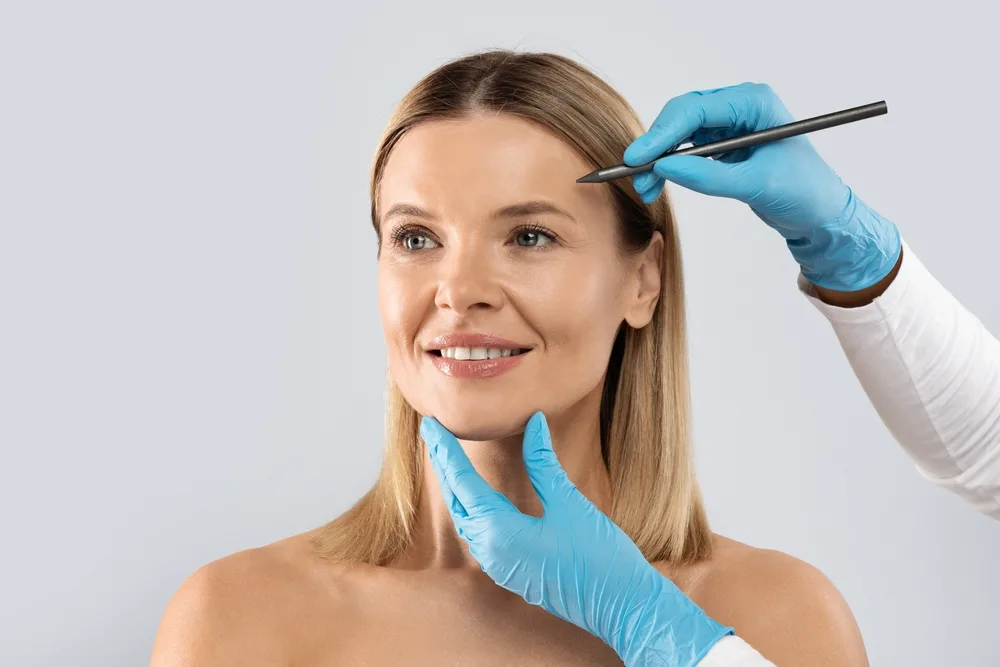
Your eyes may still feel bright and energetic, yet the position of your brows can tell a different story. As the forehead tissues descend, the eyebrows may sit lower, the upper eyelids can appear heavier, and the space around the eyes may begin to look tired, stern, or sad. You may find yourself raising your forehead throughout the day just to make your eyes feel more open. Over time, that constant effort can also deepen the horizontal lines across your forehead.
A forehead lift, also known as a brow lift, raises and repositions the tissues of the forehead and eyebrows. The procedure can improve a low or sagging brow, reduce heaviness around the upper eyes, soften selected forehead creases, and restore a more open appearance. Unlike an injectable that temporarily relaxes facial muscles, forehead lift surgery addresses the position of the brow and supporting tissues.
At Women’s LifeCenter Aesthetic Surgery and Medispa, forehead lift surgery is personalized by Elysa Fisher, MD, FACS. Dr. Fisher studies your eyebrow position, forehead height, hairline, upper eyelids, facial expressions, skin quality, and natural asymmetry before recommending surgery. Her goal is not to create an exaggerated arch or a permanently surprised expression. It is to help your upper face look more rested, balanced, and connected to the way you feel.
Schedule a Complimentary Consultation
When a Lower Brow Changes More Than Your Forehead
A descending brow can affect the entire upper face. The outer eyebrow may begin to sit lower, creating fullness near the temples and upper eyelids. The central brow may also descend, making frown lines appear deeper and causing the face to look more serious. Because these changes happen gradually, many people first notice them in photographs, video calls, or the way eye makeup begins to disappear beneath a heavier fold.
Clients often describe a growing mismatch between their energy and their expression. They may feel rested but continue hearing that they look tired. Others notice that they are unconsciously lifting their eyebrows throughout the day, particularly while reading, driving, applying makeup, or looking at a screen. By evening, the forehead may feel tense because the muscles have been working to compensate for the lower brow position.
A forehead lift can address the underlying descent rather than asking the forehead muscles to keep lifting the area. However, not every heavy upper eyelid comes from the brow. Excess eyelid skin, eyelid fat, facial asymmetry, or a combination of brow and eyelid changes may contribute. A careful evaluation is essential because treating the wrong area can produce an incomplete or unnatural result.
What Is a Forehead Lift?
A forehead lift is a cosmetic surgical procedure that raises the eyebrows and repositions the soft tissue and skin of the forehead. It is also commonly called a brow lift or forehead rejuvenation. Depending on the anatomy and technique selected, the procedure may improve forehead wrinkles, frown lines, a low eyebrow position, and brow tissue that contributes to hooding of the upper eyelids.
The procedure does not simply stretch the skin upward. Modern planning considers the deeper forehead tissues, the muscles that contribute to frowning, the shape of the eyebrows, and the relationship between the brow and hairline. The chosen approach also affects where the incisions are placed and how much of the forehead can be repositioned.
The ideal result should look natural when your face is still and when it moves. Your eyebrows should remain appropriate for your facial structure rather than being forced into a standard shape. Dr. Fisher considers the position of the inner, central, and outer brow separately because each area can descend differently. The objective is a refreshed expression, not a visibly operated appearance.
What Can Forehead Lift Surgery Improve?
A forehead lift may be considered when brow descent or forehead laxity is creating visible changes that cannot be corrected adequately with skincare or injectables. Surgery may raise the eyebrows, reduce tissue hooding around the upper eyes, and improve selected creases across the forehead and between the eyebrows. It can also help restore balance when one brow naturally sits lower than the other, although perfect symmetry cannot be guaranteed.
Forehead lift surgery may improve:
- Low or sagging eyebrows
- Heaviness above the upper eyelids
- An outer brow that has moved downward
- Horizontal forehead creases
- Vertical frown lines between the eyebrows
- A tired, stern, or sad resting expression
- Mild differences between eyebrow positions
- The need to constantly raise the forehead to open the eyes
Surgery cannot stop facial aging or remove every fine line. Skin quality, sun damage, muscle activity, and natural collagen loss continue to affect the forehead after the brow is repositioned. Some lines may soften because the tissues have been lifted, while others may remain and respond better to Xeomin, skincare, resurfacing, or another treatment. The most complete plan begins by identifying which concerns come from tissue position and which come from the skin or muscles.
Are You a Candidate for a Forehead Lift?
A good candidate is generally healthy, does not smoke, and has realistic expectations about improvement, scars, recovery, and the natural aging process. You may be considering surgery because your brows have descended, your upper eyes look increasingly hooded, or your forehead appears tense even when you feel relaxed. The procedure may also be appropriate when injectable treatments no longer address the main concern because the problem involves tissue position rather than muscle movement alone.
You may be ready to discuss a forehead lift if:
- Your eyebrows sit lower than they once did
- The outer brow creates heaviness above the eyes
- You regularly raise your forehead to see or feel more open
- Your resting expression appears tired, worried, or stern
- You want a longer-lasting structural change than an injectable offers
- You understand that surgery creates permanent incisions
- You can follow postoperative activity restrictions
- You can stop nicotine use as directed
- Your goals are based on your own preferences
Hairline position and hair density are important parts of candidacy. Certain incision approaches may raise the hairline, while others can be designed to limit that effect or address an already high forehead. Thinning hair, previous hair transplantation, receding temples, and a tendency toward hair loss may influence the safest technique. Dr. Fisher will examine these details before recommending a surgical approach.
Forehead Lift or Eyelid Lift?
A forehead lift raises a low brow, while an eyelid lift, also called blepharoplasty, removes or repositions selected skin, muscle, and fat around the eyelids. Both procedures can make the upper eye area look more open, but they address different sources of heaviness. A person with a well-positioned brow and excess upper eyelid skin may benefit from eyelid surgery without a forehead lift. Someone whose brow has descended may receive an incomplete result if only the eyelid skin is treated.
You can see why the distinction matters by gently observing your eyebrows in a relaxed position. When you raise the brow, the upper eyelid often appears more open, but that does not automatically mean a forehead lift is required. The movement may also make it difficult to judge how much true eyelid skin is present. Dr. Fisher evaluates the area without asking the forehead muscles to compensate so she can identify the contribution of the brow and eyelid separately.
Some clients benefit from combining a brow lift with upper or lower eyelid surgery. A combined plan may create greater balance by treating both brow position and excess eyelid tissue during one surgical period. However, combining procedures is not necessary for everyone. Each surgery should have a clear role in producing the desired improvement.
Forehead Lift or Xeomin?
Xeomin temporarily relaxes selected muscles that create frown lines and horizontal forehead lines. It can be a useful option when muscle movement is the main cause of the concern and the eyebrow position remains appropriate. Results are temporary, and treatment must be repeated as muscle activity returns.
A forehead lift addresses the position of the brow and forehead tissues. It may be more appropriate when the eyebrows have descended and are contributing to hooding or heaviness around the eyes. However, surgery does not necessarily eliminate every movement-related crease. Some clients may still choose occasional neuromodulator treatment after they have healed.
The decision should not be based only on whether you prefer an injection or surgery. It should be based on the cause of the change you see. Dr. Fisher can show you whether the concern comes primarily from muscle activity, skin quality, brow descent, eyelid tissue, or several factors working together.
Types of Forehead Lift Surgery
Forehead lift techniques differ according to incision placement, the portion of the brow being treated, hairline position, forehead height, and the amount of correction required. Common approaches include endoscopic, temporal, hairline, coronal, and direct brow lift techniques. Each method has different benefits, limitations, and scar locations.
An endoscopic forehead lift generally uses several small incisions behind the hairline. A narrow camera and surgical instruments allow the surgeon to view and reposition the tissues beneath the skin. A temporal lift focuses more on the outer brow through incisions near the temples, while a hairline lift places the incision near the front of the hairline and may be considered when forehead height is an important concern.
A coronal technique uses a longer incision within the hair-bearing scalp, while a direct brow lift places an incision close to the eyebrow. These approaches may be appropriate in selected situations, but they are not interchangeable. Hair density, scar visibility, forehead length, skin thickness, prior surgery, and the desired direction of lift all affect the decision.
Women’s LifeCenter does not approach forehead lift surgery as one fixed operation. Dr. Fisher will explain which technique is appropriate for your anatomy and where the resulting incisions are likely to be placed. She will also explain whether the expected degree of improvement justifies the selected approach.
Your Consultation With Dr. Elysa Fisher
Your consultation begins with a conversation about what has changed and what you would like to improve. Dr. Fisher will ask whether your main concern is brow position, forehead lines, eyelid heaviness, asymmetry, or a resting expression that no longer feels accurate. She will also want to know whether you have previously received Xeomin, Botox, fillers, threads, eyelid surgery, hair restoration, or another facial procedure.
During the examination, Dr. Fisher evaluates your eyebrows at rest and during movement. She studies the height and shape of the brow, forehead length, hairline, eyelid skin, muscle strength, facial symmetry, and the relationship between the upper face and the rest of your features. Photographs may be taken to document your starting point and assist with planning. A complete medical review also helps identify medications, conditions, or habits that could affect anesthesia, bleeding, wound healing, or recovery.
Dr. Fisher completed her undergraduate, graduate, and postgraduate education at Northwestern University and has been board-certified in plastic surgery since 1992. She created her practice around accessibility, education, and the belief that clients deserve to understand the full range of surgical and non-surgical options available to them.
That philosophy is especially important with forehead surgery because the most aggressive lift is rarely the most natural one. Dr. Fisher will explain what surgery can change, which lines may remain, where scars may be located, and whether eyelid surgery or a non-surgical treatment would be more appropriate. The purpose of the consultation is to help you make a clear decision, not to persuade you to undergo surgery.
Preparing for Forehead Lift Surgery
Preparation may include medical evaluation, laboratory testing, medication adjustments, and specific instructions regarding vitamins or supplements. Aspirin, anti-inflammatory medicines, blood thinners, and certain supplements may increase bleeding, but prescribed medications should never be stopped without approval from the clinician who manages them. Dr. Fisher will provide instructions based on your individual medical history.
Nicotine use is particularly important because it reduces blood flow and can interfere with incision healing. Smoking, vaping, and other nicotine products may increase the risk of complications, so you must follow the required stopping period before and after surgery. You should also arrange for someone to drive you home and remain available during the early recovery period.
Prepare a comfortable recovery area where you can rest with your head elevated. Place medications, water, simple meals, and frequently used items within easy reach. You may also want button-front or zip-front clothing so you do not need to pull garments over your head. Planning these details in advance allows you to focus on healing instead of solving practical problems immediately after surgery.
What Happens During Surgery?
Forehead lift surgery may be performed with local anesthesia and sedation or general anesthesia, depending on the technique and surgical plan. The incisions are placed according to the selected approach, often within or near the hairline. The forehead tissues are then carefully released, repositioned, and secured at a more appropriate level.
The procedure may also involve adjusting selected muscles that contribute to deep frown lines. However, muscle treatment must be balanced carefully because facial movement is part of a natural expression. Dr. Fisher evaluates eyebrow shape, symmetry, and the degree of elevation throughout the operation rather than simply pulling both sides upward by the same amount.
The incisions are closed with sutures, clips, or another method appropriate to the technique. A light dressing may be applied, and a temporary drain may occasionally be used to prevent fluid accumulation. You will receive detailed instructions about sleeping position, incision care, hair washing, medications, and symptoms that require a call.
Forehead Lift Recovery
Swelling, bruising, tightness, itching, numbness, and scalp sensitivity are common during early recovery. Bruising may move downward around the eyes even though the incisions are located near or within the hairline. Keeping the head elevated and following Dr. Fisher’s instructions can help manage swelling. Do not apply ice, heat, or pressure unless she specifically recommends it for your procedure.
Initial incision healing commonly takes about 10 to 14 days, and sutures or clips are removed when appropriate. Many people feel ready to return to work and routine social activity within this general period, although bruising, swelling, and individual comfort can change the timeline. Healing continues for several weeks, and the final appearance may take months to fully develop.
Strenuous exercise, bending, heavy lifting, and activities that increase pressure in the head may be restricted during early recovery. You should also be gentle when washing, drying, brushing, or styling your hair near the incisions. Scalp sensation may feel numb, itchy, or unusually sensitive as the nerves recover.
Clients frequently say that detailed guidance makes a surgical recovery feel much less intimidating. Reviews of Dr. Fisher’s care repeatedly mention her thorough explanations, accessibility, compassion, and willingness to answer questions before and after treatment. Clients also describe the office and team as calm, welcoming, and attentive to individual sensitivities.
Forehead Lift Scars and Hairline Changes
Every forehead lift creates scars, although the location depends on the technique used. Incisions may be concealed within the hair, positioned along the hairline, placed near the temples, or located directly above the eyebrows in selected cases. Scars generally soften and fade with time, but they do not disappear completely.
Hairline changes are an important part of surgical planning. Certain techniques can raise the hairline, which may be undesirable for someone who already has a long forehead. A hairline approach may limit or alter that effect, but it places the incision where the forehead meets the hair. Dr. Fisher will discuss the tradeoff between forehead length, lift direction, and scar location before surgery.
Temporary hair thinning can occur around incisions, while lasting hair loss is a less common risk. Your personal history of hair loss, hair texture, styling habits, and previous scalp procedures should be discussed. Careful planning is especially important when hair is thin or the temples have begun to recede.
Forehead Lift Results
A forehead lift can create a more open eye area, restore a better brow position, and reduce the heaviness that makes the upper face look tired or tense. The result becomes clearer as bruising and swelling improve. Early eyebrow position may appear higher or less even than expected, but the tissues gradually settle during healing.
Results can be long-lasting, although no cosmetic procedure stops aging. Skin and soft tissues continue changing with time, and sun exposure can accelerate visible aging. Daily sun protection, healthy habits, and a stable skincare routine can help support the appearance of the forehead after healing.
The best outcome should not make everyone immediately notice that your brows were lifted. Instead, you may appear more rested, approachable, or refreshed. Your eyes should remain expressive, and your eyebrows should still belong to your face. Dr. Fisher plans the surgery around balance rather than chasing an extreme arch or trend.
Risks and Important Considerations
Forehead lift surgery carries risks that must be understood before proceeding. Possible complications include bleeding, infection, anesthesia reactions, fluid accumulation, poor wound healing, unfavorable scarring, numbness, itching, persistent pain, eyebrow asymmetry, elevated hairline, hair loss near the incisions, eye irritation, skin loss, and the possibility of revision surgery. Facial nerve injury with weakness or paralysis is also a recognized risk, although it is uncommon.
Some asymmetry exists naturally before surgery and may remain afterward. One eyebrow may also heal or settle differently from the other during the early months. Minor differences may improve over time, while a persistent concern might require an injectable treatment or additional surgery.
Contact the office immediately if you experience sudden or one-sided swelling, worsening pain, fever, unusual drainage, shortness of breath, chest pain, irregular heartbeat, new facial weakness, or another symptom identified in your postoperative instructions. Early communication allows Dr. Fisher to evaluate whether the symptom is part of normal healing or requires treatment.
Why Choose Dr. Elysa Fisher for a Forehead Lift in Wilmette?
Forehead lift surgery requires more than raising the eyebrows. The surgeon must understand facial nerves, forehead muscles, hairline position, eyelid anatomy, facial proportions, and how a small change in one area affects the entire expression. Dr. Fisher brings decades of surgical experience and the perspective of a board-certified plastic surgeon who provides both surgical and non-surgical facial care.
Her approach is also shaped by the reason Women’s LifeCenter Aesthetic Surgery and Medispa was created. Dr. Fisher envisioned a place where women could discuss changes in their appearance, health, comfort, and confidence without feeling rushed or reduced to a procedure. Her role is to provide information, explain realistic options, and help each client decide what feels right for her life.
That may mean recommending a forehead lift, combining it with eyelid surgery, beginning with Xeomin, or deciding that surgery is not yet necessary. The most meaningful plan is not the one that includes the most treatment. It is the one that identifies the real source of the concern and addresses it with judgment, precision, and respect for the individual face.