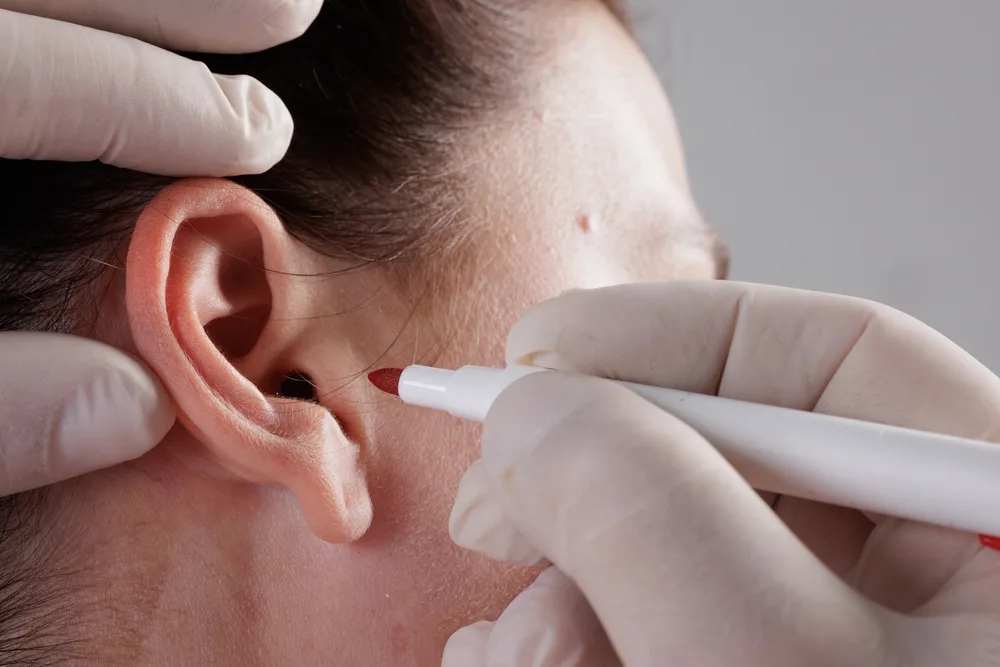
Ears are usually noticed as part of the face rather than as separate features. However, when one or both ears project farther from the head, appear uneven, or have an unusual shape, they may draw more attention than you want. You might wear your hair down even on warm days, avoid certain photographs, or feel uncomfortable when glasses and hairstyles make your ears more visible. Ear otoplasty surgery can reshape or reposition the outer ears so they look more balanced with the head and face.
Otoplasty is a personalized plastic surgery procedure that can change the shape, position, size, or proportion of the outer ear. It is often called ear pinning when the primary goal is to bring prominent ears closer to the head, although the procedure can address more than projection alone. Otoplasty may also improve selected differences in ear shape, size, symmetry, or contour caused by natural development, injury, or an earlier operation. The surgery changes the visible outer ear and generally does not improve or reduce hearing.
At Women’s LifeCenter Aesthetic Surgery and Medispa, Elysa Fisher, MD, FACS, evaluates both ears in relation to your face, head shape, hairline, and natural proportions. Dr. Fisher’s goal is not to press the ears unnaturally flat against the head. Instead, she plans a measured correction that preserves natural curves while reducing the feature that has been drawing unwanted attention. The best result allows the ears to become part of the overall face again rather than the first thing you notice.
Schedule a Complimentary Consultation
When Your Ears Influence Everyday Choices
An ear concern can quietly shape habits for years. A client may choose every haircut according to how well it covers the ears, turn the same direction in photographs, or avoid hats that press the ears forward. Someone with one ear that projects more than the other may be especially aware of the difference during video calls or when viewing photographs from behind. These experiences may seem small to another person, yet they can affect confidence because they are repeated almost every day.
Adults sometimes assume they have waited too long to consider ear surgery. In reality, otoplasty can be performed after the ears have reached their mature size, and adults may pursue the procedure even when the concern has been present since childhood. Others begin considering surgery after an injury changes the contour of an ear or after an earlier procedure does not provide the balance they expected. Age alone does not determine candidacy, although health, tissue quality, previous procedures, and personal goals all influence the plan.
Choosing otoplasty does not mean something is objectively wrong with your ears. Many ear shapes are healthy variations of normal anatomy. The more important question is whether the feature consistently bothers you and whether surgery can create enough improvement to justify its scars, recovery, and risks. Dr. Fisher will help you make that decision without pushing you toward a standard ideal.
What Is Otoplasty?
Otoplasty is surgery performed on the visible outer ear, also known as the auricle. Depending on the concern, the procedure may reshape cartilage, create or strengthen a missing fold, reduce excessive projection, remove selected tissue, or reposition the ear closer to the head. The technique is individualized because prominent ears can result from several different structural patterns.
For example, an ear may project because the inner bowl of cartilage is unusually deep. Another ear may lack the natural fold that normally runs inside the outer rim. Some clients have both features, while others have differences between the right and left sides. A successful operation identifies the specific source of projection instead of simply pulling the entire ear backward.
Otoplasty can also describe procedures that reduce unusually large ears, reshape an ear changed by trauma, or revise the result of an earlier operation. More involved ear reconstruction is different from straightforward cosmetic ear pinning and may require additional techniques or more than one stage. Dr. Fisher will explain whether your concern fits a standard cosmetic otoplasty or requires a different type of evaluation.
What Can Ear Surgery Improve?
Ear surgery may improve shape, projection, proportion, and selected differences between the two ears. Even when one ear is more prominent, both ears may need to be considered so the final result looks balanced from the front, side, and back. Otoplasty does not move the ears to a different location on the head, and it cannot guarantee perfect symmetry. It works by modifying the shape or position of the outer ear within the limits of the existing anatomy.
Otoplasty may be considered for:
- Ears that project farther from the head than desired
- A poorly defined or missing natural ear fold
- An enlarged inner cartilage bowl
- One ear that appears more prominent than the other
- Ears that feel large in proportion to the head
- Selected contour changes caused by injury
- An ear shape that has been bothersome since childhood
- Dissatisfaction with the result of an earlier ear operation
The purpose is not to make both ears mathematically identical. Natural ears have small differences in height, shape, folds, and projection, just as the two sides of the face differ. Attempting to eliminate every variation can create an overcorrected or unnatural appearance. Dr. Fisher focuses on meaningful balance rather than artificial perfection.
Ear Pinning Without an Overcorrected Look
The phrase “ear pinning” can sound as though the ears are simply pressed flat and stitched in place. Well-planned otoplasty is more refined than that. The surgeon may reshape specific portions of cartilage and create natural folds so the ear sits closer to the head without losing its three-dimensional structure. Surgical techniques should be individualized to avoid a visibly flattened or tightly pinned result.
How close the ears should sit depends on the client’s head shape, cartilage, hairline, and starting anatomy. The upper, middle, and lower portions of the ear may also project by different amounts. Pulling every area backward equally can create an unnatural curve or make the ear look attached too closely to the scalp. Dr. Fisher evaluates each segment independently so the correction follows the ear’s natural structure.
This measured approach is especially important for adults who want improvement without making the operation obvious. The goal may be as simple as feeling comfortable wearing a ponytail, having a short haircut, or seeing a more even outline in photographs. A subtle structural adjustment can make those everyday choices feel easier without changing the identity of the face.
Am I a Candidate for Otoplasty?
A suitable adult candidate is generally in good health, does not smoke, and has a specific concern that ear surgery can realistically address. You should understand that the procedure creates permanent incisions and that swelling, tenderness, temporary numbness, and activity restrictions are part of recovery. The decision should also come from your own preference rather than pressure from a partner, relative, or beauty trend.
You may be ready to discuss otoplasty if:
- One or both ears project more than you would like
- You feel that your ears are out of proportion with your head
- Ear asymmetry consistently bothers you
- You avoid certain hairstyles, hats, or photographs
- A previous injury changed an ear’s visible contour
- You understand that perfect symmetry cannot be guaranteed
- You can protect the ears while they heal
- You can stop smoking and nicotine use as directed
- Your goals focus on improvement rather than an idealized ear shape
Current or recurring ear infections should be discussed before cosmetic surgery. Dr. Fisher also needs to know about bleeding conditions, allergies, medical problems, previous ear operations, scar history, hearing concerns, and all medications and supplements. An examination determines whether the skin and cartilage can support the proposed correction and whether another specialist should evaluate any functional symptoms first.
Does Otoplasty Affect Hearing?
Cosmetic otoplasty reshapes the visible outer ear and does not ordinarily change hearing ability. The operation does not treat the eardrum, middle ear, inner ear, or the nerve pathways responsible for hearing. Its purpose is to change external shape, position, or proportion.
A hearing concern should therefore be evaluated separately. Ringing, sudden hearing loss, chronic drainage, repeated infections, ear pressure, dizziness, or significant pain may require assessment by an ear, nose, and throat specialist or another appropriate medical professional. Cosmetic ear surgery should not be used as a substitute for diagnosing a functional ear problem. Tell Dr. Fisher about any symptoms during your consultation so the right evaluation can occur before surgery.
Your Consultation With Dr. Elysa Fisher
Your consultation begins with what you see and how it affects you. Dr. Fisher will ask whether the concern involves projection, size, shape, asymmetry, previous trauma, or an earlier surgical result. She may also ask which views bother you most because an ear can look balanced from the front yet project noticeably when viewed from behind. Your preferences help define what would count as a meaningful and natural improvement.
Dr. Fisher will examine the size, placement, folds, cartilage, projection, skin, and symmetry of both ears. Photographs may be taken from multiple angles for medical documentation and surgical planning. She will also review your health history, prior procedures, medications, allergies, tobacco or nicotine use, and any history of infections or difficult scars. A complete consultation should include the anticipated technique, anesthesia, likely outcome, recovery, risks, and alternatives.
Dr. Fisher has 42 years of medical experience. She completed medical school, general surgery residency, and plastic surgery fellowship training at Northwestern Feinberg School of Medicine, and she became board-certified in plastic surgery through the American Board of Plastic Surgery in 1992. Her practice philosophy emphasizes accessibility, education, and helping clients understand both the possibilities and limitations of treatment.
This matters because otoplasty requires judgment as much as technique. The ears must be assessed within the full outline of the head and face, and correction should be strong enough to make a difference without appearing overdone. Dr. Fisher will explain where improvement is realistic and which natural differences are likely to remain.
Preparing for Ear Otoplasty Surgery
Preparation may include a medical evaluation, laboratory testing, and adjustments to certain medications or supplements. Aspirin, anti-inflammatory medicines, and some herbal products may increase bleeding, although you should never stop a prescribed medication without approval from the clinician who manages it. Dr. Fisher will provide instructions based on your health and the anesthesia planned for your procedure.
Smoking and nicotine use are particularly important because nicotine reduces blood flow and can slow healing. Cigarettes, vaping products, nicotine pouches, and other nicotine sources must be discussed honestly. Follow the required stopping period before and after surgery rather than assuming a different form of nicotine is safer for the incision.
You will need someone to drive you home, and it may be recommended that an adult stay with you during the first night. Prepare loose-collared or button-front clothing so you do not have to pull a tight shirt over your ears. It is also helpful to arrange a sleeping area that allows you to remain on your back without placing pressure on either ear.
How Is Otoplasty Performed?
Otoplasty may be performed with local anesthesia and sedation, intravenous sedation, or general anesthesia. The choice depends on the extent of correction, surgical setting, medical history, and Dr. Fisher’s recommendation. The operation often takes approximately one to two hours, although a more complex revision or reconstruction can take longer.
Incisions are commonly placed behind the ears, where the resulting scars can be concealed within the natural crease between the ear and the head. When access from the front is needed, incisions may be positioned within existing ear folds. Dr. Fisher then reshapes, folds, scores, removes, or repositions selected cartilage according to the cause of the concern. Internal sutures may be used to create and hold the new cartilage shape.
Both ears are evaluated throughout the operation even when one side is the main concern. This does not necessarily mean that identical work is performed on each ear. One side may need greater correction, a different suture pattern, or no treatment at all. The goal is an improved relationship between the ears, not identical surgical steps.
After the correction is complete, the incisions are closed and protective dressings are placed around the ears. These dressings help protect the incisions from accidental pressure and support the new position during early healing. They should remain in place exactly as directed because removing or altering them too early may affect the correction.
Otoplasty Recovery
The ears may feel sore, tight, swollen, numb, itchy, or tender during the first days after surgery. Discomfort is expected, but worsening pain that does not respond to the recommended medication should be reported. Bandages or dressings protect the surgical sites and hold the ears in position during the earliest stage of healing.
After the initial dressing is removed, Dr. Fisher may recommend a soft, supportive headband for a period, especially while sleeping. The headband helps protect the ears from being folded forward if you roll over during the night. You should avoid sleeping directly on either ear, rubbing the incisions, or pulling tight clothing over the head until cleared.
Many clients can return to lighter work and ordinary public activities after the initial swelling and dressings improve, although the exact timeline varies. Full recovery commonly takes several weeks, and contact sports, heavy lifting, intense exercise, and activities that could bend or strike the ears must wait until Dr. Fisher approves them. Glasses, sunglasses, helmets, headphones, and certain hairstyles may also need to be adjusted if they place pressure on healing tissue.
Recovery is not complete simply because the ears look presentable. Internal sutures and cartilage continue healing after the skin begins to look better. One ear may remain more swollen than the other, and temporary differences can be more noticeable before the tissues settle. Following your personal postoperative instructions is more useful than comparing your appearance with someone else’s online recovery.
Otoplasty Scars
Otoplasty creates permanent scars, although they are usually placed behind the ears or within natural creases whenever the technique allows. Early scars may appear red, firm, raised, or darker than the surrounding skin. They generally soften and fade over time, but they do not disappear completely.
Some people naturally develop thicker or more noticeable scars. A personal or family history of keloids, raised scars, or prolonged wound healing should be discussed before surgery. Infection, pressure, sunlight, nicotine exposure, and tension on the incision can also influence scar development. Dr. Fisher will provide care instructions based on how your incisions are healing.
Because most scars are positioned behind the ear, they are often difficult to see from ordinary conversational angles. However, scar concealment cannot be guaranteed in every hairstyle or from every view. Your consultation should include a clear discussion of where the incisions will be placed and how visible they may be after healing.
When Will I See the Results?
A change in ear projection may be visible as soon as the initial dressings are removed. However, swelling can temporarily make the ears look larger, less even, or more tightly positioned than the settled result. The contour becomes clearer as the swelling decreases and the cartilage heals in its new shape.
Otoplasty results are generally long-lasting because the cartilage is surgically reshaped and secured. Still, no surgeon can guarantee that both ears will remain perfectly matched or that a small degree of recurrence will never occur. Cartilage has natural memory, and healing forces may affect the two sides differently. Revision surgery may occasionally be considered when a significant concern remains or develops.
A natural result should not make the ears disappear completely. They should maintain appropriate curves and a balanced amount of projection. The change is often most meaningful when you stop planning your appearance around the ears and begin choosing hairstyles, photographs, and clothing without giving them as much thought.
Risks and Important Considerations
Every operation involves risk. Possible otoplasty complications include bleeding or hematoma, infection, anesthesia reactions, blood clots, persistent pain, changes in sensation, poor wound healing, visible or unfavorable scars, contour irregularities, asymmetry, overcorrection, and the possible need for revision surgery.
Internal sutures may occasionally become palpable, irritated, or exposed. Cartilage can also shift or partially return toward its previous position during healing. In addition, a correction that is too strong may create an unnaturally flattened appearance. Careful planning reduces avoidable problems but cannot eliminate every uncertainty associated with healing.
Call the office promptly if you experience increasing pain, sudden swelling, fever, chills, drainage, spreading redness, skin color changes, shortness of breath, or another symptom listed in your postoperative instructions. Do not remove dressings, pull at a visible suture, or attempt to reposition an ear yourself. Early communication allows Dr. Fisher to determine whether a symptom is part of normal healing or requires treatment.
Why Choose Dr. Elysa Fisher for Otoplasty in Wilmette?
Ear surgery requires a detailed understanding of cartilage, facial proportion, scar placement, symmetry, and the subtle difference between an improved position and an overcorrected one. Dr. Fisher brings the perspective of a Northwestern-trained, board-certified plastic surgeon with more than four decades of medical experience. Her training includes medical school, general surgery residency, and plastic surgery fellowship at Northwestern Feinberg School of Medicine.
Her approach also reflects the purpose behind Women’s LifeCenter Aesthetic Surgery and Medispa. The practice was built as a supportive environment where clients can understand their choices and consider treatments that fit their health, confidence, and stage of life. Dr. Fisher believes a surgeon should remain accessible and serve as a source of information, not simply perform the procedure requested.
That means your consultation may confirm that otoplasty is likely to create a meaningful improvement. It may also reveal that the difference is smaller than you believed, that only one portion of the ear needs correction, or that the result you want cannot be achieved without an unnatural appearance. Honest guidance is part of the care, especially when surgery changes a feature that frames the face from every angle.