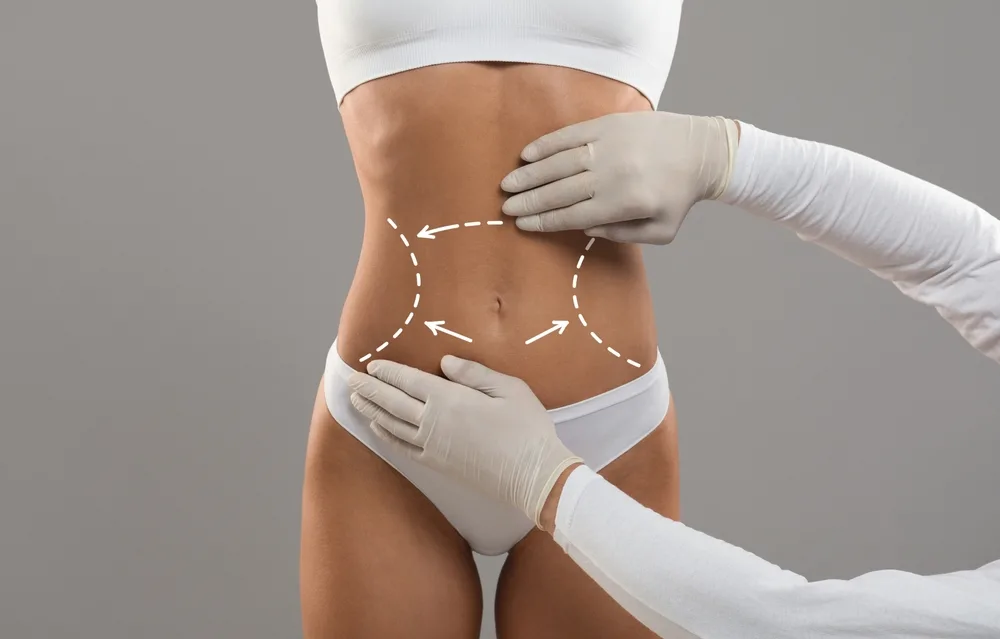
Reaching a healthy, stable weight can take years of discipline, yet the shape you see afterward may not reflect everything you accomplished. Pregnancy, significant weight loss, aging, and genetics can leave stretched abdominal skin, loose upper arms, resistant fat, or tissue that no longer follows the contours beneath it. Exercise can strengthen muscle and improve health, but it cannot always tighten skin that has lost its elasticity or repair abdominal tissue stretched by pregnancy.
Body contouring surgery reshapes selected areas by removing excess skin, reducing localized fat, tightening weakened tissue, or combining these approaches in a personalized surgical plan. At Women’s LifeCenter Aesthetic Surgery and Medispa, Elysa Fisher, MD, FACS, begins by identifying what is actually causing the concern you see. The goal is not to force your body into a standard silhouette. It is to create smoother, more balanced contours that respect your natural frame and the life you have built within it.
Dr. Fisher’s current body procedures include tummy tuck surgery and arm lift surgery, along with minimally invasive SmartLipo Triplex for selected areas of localized fat and skin laxity. Because these treatments solve different problems, the first step is not choosing a procedure from a list. It is understanding whether your concern comes from loose skin, excess fat, weakened muscle, tissue position, or several changes occurring together.
Schedule a Complimentary Consultation
When Your Body No Longer Reflects Your Progress
Many clients who consider body contouring are not looking for a shortcut to weight loss. They have already changed their habits, maintained a healthier weight, recovered from pregnancy, or worked consistently to become stronger. What remains is often something effort alone cannot correct, such as abdominal skin that folds over a waistband, upper-arm tissue that moves despite muscle definition, or a pocket of fat that remains out of proportion with the surrounding area.
These changes can affect ordinary experiences in surprisingly persistent ways. Loose skin may rub during exercise, gather beneath clothing, become irritated in warm weather, or make it difficult to find garments that fit the rest of the body properly. Some clients tell us they reached a goal they once thought was impossible, yet still find themselves covering the same areas and avoiding the same clothing. Others are less concerned about appearance than they are about feeling physically comfortable and being able to move without skin pulling, chafing, or getting in the way.
Body contouring is not about erasing the story of pregnancy, weight loss, or aging. It is about deciding whether the tissue left behind continues to interfere with how you dress, move, or feel in your body. That decision is deeply personal, and the amount of change that feels worthwhile will differ from one client to another.
What Is Body Contouring Surgery?
Body contouring is an umbrella term for procedures that improve body shape by removing excess skin and fat or tightening the supporting tissue beneath the skin. It is often associated with significant weight loss because skin that once covered a larger body may not contract around the reduced frame. However, body contouring can also address changes caused by pregnancy, aging, heredity, or smaller areas of disproportion that remain at a stable weight.
The word “contouring” does not describe one operation. A client with separated abdominal tissue and hanging skin may need a tummy tuck, while someone with loose upper-arm skin may benefit from an arm lift. Another client may have firm skin but a localized fat pocket that could respond to liposuction or a minimally invasive body-sculpting treatment. The correct procedure depends on the tissue creating the concern, not simply the location on the body.
Body contouring is also different from weight-loss surgery. The purpose is to refine shape after the body is reasonably stable, not to treat obesity or produce major weight reduction. Although skin and fat have weight, the meaningful result is a change in contour, proportion, physical comfort, or function rather than a number on the scale.
What Can Body Contouring Improve?
Body contouring may be considered when stretched skin, localized fat, or weakened tissue does not respond to otherwise healthy habits. The amount of correction varies considerably, so surgery should be planned around the specific areas that affect you most. Some clients need one focused procedure, while others may benefit from a coordinated plan performed together or in carefully separated stages.
Body contouring may address:
- Loose abdominal skin after pregnancy or weight loss
- A lower abdominal fold or overhang
- Separated or weakened abdominal tissue
- Loose upper-arm skin and tissue
- Localized fat around the abdomen, waist, arms, hips, or thighs
- Skin folds that rub, trap moisture, or interfere with exercise
- Body proportions that remain uneven after significant weight loss
- Clothing that no longer fits the body comfortably
- Several related concerns addressed through a staged surgical plan
Surgery cannot create perfect symmetry, stop aging, or prevent future changes in weight. It also cannot guarantee that every stretch mark, surface irregularity, or area of cellulite will disappear. Dr. Fisher will explain which concerns are likely to improve, which may remain, and whether a different treatment is better suited to part of your goal.
Tummy Tuck Surgery
A tummy tuck, also called abdominoplasty, removes selected excess skin and fat from the abdomen and can tighten weakened or separated abdominal tissue. It may be considered after pregnancy, significant weight loss, or when the abdominal skin has lost enough elasticity that it hangs or folds despite a stable weight. Dr. Fisher currently offers tummy tuck surgery for healthy clients whose abdominal concerns cannot be corrected through diet and exercise alone.
During a full tummy tuck, a low abdominal incision allows the loose skin to be drawn downward and removed. When the supporting abdominal tissue has separated or weakened, it may also be repaired as part of the surgical plan. The remaining skin is repositioned, and the belly button is generally brought through a new opening while remaining attached to its underlying stalk.
A tummy tuck is not interchangeable with liposuction. Liposuction reduces fat but does not remove a meaningful amount of loose skin or repair abdominal separation. Some clients benefit from combining both techniques, but each part should have a clear purpose rather than being added automatically.
Arm Lift Surgery
An arm lift, also known as brachioplasty, removes loose skin and reshapes the upper arm. It may be considered when aging, heredity, or weight loss leaves tissue that hangs from the underside of the arm and does not tighten through exercise. Women’s LifeCenter currently offers arm lift surgery for clients who want to tighten, smooth, and contour this area.
Exercise can build the triceps and other upper-arm muscles, but muscle development does not always change the stretched skin covering them. Clients may feel strong yet continue avoiding sleeveless clothing because the tissue moves, folds, or feels out of proportion with the rest of the arm. An arm lift addresses the skin and soft tissue responsible for that concern.
The tradeoff is a permanent incision, which may extend along the inner or underside of the upper arm depending on how much tissue must be removed. A shorter scar is not always possible when looseness extends from the armpit toward the elbow. Dr. Fisher will explain the likely scar location and help you decide whether the expected contour improvement feels worthwhile.
Liposuction and SmartLipo Triplex
Liposuction removes localized fat through a thin tube called a cannula. It can refine areas that remain resistant to weight loss when the skin has enough elasticity to adapt to the smaller contour. However, it is not a treatment for obesity, and it may leave skin looking looser when elasticity is already poor.
Women’s LifeCenter also offers SmartLipo Triplex, a minimally invasive laser-assisted lipolysis treatment. The practice describes the procedure as using a small cannula containing a laser fiber that targets fat while delivering energy intended to support skin tightening. Current treatment areas listed by the practice include the abdomen, love handles, arms, inner and outer thighs, and other selected areas.
SmartLipo Triplex is not a substitute for surgery when there is a large amount of hanging skin. Likewise, a tummy tuck or arm lift may be unnecessary when the skin is firm and the concern is primarily a limited fat pocket. Dr. Fisher will evaluate the skin and fat together so the treatment matches the actual structure creating the problem.
Body Contouring After Major Weight Loss
Significant weight loss can change health, mobility, and daily life, yet loose skin may remain across the abdomen, arms, breasts, back, thighs, or other areas. These folds can make exercise uncomfortable, cause rashes, trap moisture, or serve as a constant reminder of the body before weight loss. Surgical body contouring can remove selected excess tissue and create a smoother outline around the reduced frame.
Clients who have several areas of looseness may assume everything should be treated during one operation. However, extensive body contouring is often safer and more manageable when procedures are separated into stages. The order depends on which area causes the greatest physical or emotional burden, the amount of tissue involved, overall health, and how one procedure may affect the next.
Your weight should be reasonably stable before surgery because significant fluctuations can stretch the tissues again and may increase the risk of complications. Nutritional health also matters, particularly after bariatric surgery, because protein, vitamin, or mineral deficiencies can affect wound healing. Dr. Fisher will review your weight history and coordinate additional medical evaluation when needed.
Am I a Candidate for Body Contouring Surgery?
A suitable candidate is generally in good overall health, near a stable weight, and bothered by loose skin or localized fat that has not improved through lifestyle changes. You should understand that removing skin requires permanent scars and that recovery may temporarily limit work, exercise, lifting, and household responsibilities. Your reason for pursuing surgery should come from your own goals rather than pressure to match another person’s body.
You may be ready to discuss body contouring if:
- Your weight has remained reasonably stable
- Loose skin or localized fat continues to bother you
- You are not relying on surgery as a weight-loss method
- You understand the location and length of likely scars
- You can stop smoking, vaping, and nicotine use as directed
- You can arrange help during early recovery
- You can follow limitations on lifting and exercise
- Your expectations focus on meaningful improvement rather than perfection
Nicotine is an important concern because it restricts blood flow and can increase the risk of delayed healing, wound separation, infection, and skin loss. Medical conditions, medications, previous surgery, circulation problems, and a history of difficult scarring may also affect candidacy. Dr. Fisher will review these details before recommending a procedure.
Your Consultation With Dr. Elysa Fisher
Your consultation begins with the areas that affect you most and why they matter in your life. Dr. Fisher will ask about pregnancies, weight changes, exercise, previous procedures, medical conditions, medications, nicotine use, and the amount of recovery support available at home. She will then examine the skin, fat distribution, muscle structure, scars, symmetry, and relationship between the areas you want to change.
This evaluation often reveals that what looks like one concern is actually caused by several different tissues. A rounded abdomen may come from fat, loose skin, abdominal separation, or a combination. Upper-arm fullness may involve fat, skin laxity, or both, and each situation requires a different treatment. Dr. Fisher will explain those distinctions in clear language so you understand why one option may be recommended over another.
Clients on Dr. Fisher’s current site frequently describe her as detailed, accessible, compassionate, and willing to answer every question. One tummy tuck client shared that she had been troubled for years by a persistent ledge after two C-sections and felt at ease from the initial consultation through postoperative care. Experiences like this reflect the importance of being heard before making a decision that involves permanent scars and a significant recovery.
Combining or Staging Body Procedures
Combining procedures may allow related areas to be treated during one period of anesthesia and one coordinated recovery. For example, abdominal skin removal and selected fat reduction may contribute to the same contouring goal. However, combining more procedures also increases surgical time, the amount of tissue healing at once, and the practical demands of recovery.
A staged approach may be recommended when several large areas need correction or when treating everything together would create unnecessary risk. One procedure may also change how a neighboring area appears, allowing the next stage to be planned more accurately. Separating operations does not mean the overall plan is less comprehensive.
Dr. Fisher will consider your health, procedure length, expected blood loss, mobility after surgery, and available support. The safest plan is not always the fastest one. Each operation should create a meaningful benefit without asking your body to recover from more than is reasonable at one time.
Body Contouring Recovery
Recovery depends on the procedure, the number of areas treated, and the physical demands of your normal routine. Swelling, bruising, tightness, soreness, numbness, and fatigue are common during early healing. Dressings, compression garments, or temporary drains may be used depending on the operation.
Gentle walking is often encouraged to support circulation, but strenuous exercise and heavy lifting must wait. A client recovering from an abdominal procedure may initially stand slightly bent because the skin and internal repair feel tight. Someone healing from an arm lift may need help with overhead reaching, lifting children, carrying groceries, and repetitive arm movements.
Return to work varies widely. A desk-based position may allow an earlier return than nursing, childcare, fitness instruction, or work involving lifting and prolonged movement. Some clients return to lighter duties within one to three weeks, while complete healing and return to unrestricted activity can take several months depending on the procedure.
Recovery rarely moves in a perfectly straight line. You may feel stronger one day and more swollen after increasing activity the next. Following Dr. Fisher’s instructions is more useful than comparing yourself with someone who had different procedures, health factors, and responsibilities.
Scars and Long-Term Results
Skin cannot be removed without incisions, so body contouring always creates scars. Dr. Fisher plans incision placement with clothing and natural body folds in mind whenever the procedure allows, but scar length is determined by how much tissue must be removed. Choosing an incision that is too short to address the looseness may produce a poor contour or excessive tension.
Scars often begin pink, firm, raised, or darker than the surrounding skin. They generally soften and fade over time, although they never disappear completely, and some people naturally form wider or more noticeable scars. Final scar maturation can take a year or longer.
The improvement in body shape is visible soon after surgery, but swelling initially hides the final result. Extensive post-weight-loss contouring may continue settling for many months, and authoritative sources note that final results from multiple procedures can take up to two years to fully develop. Maintaining a reasonably stable weight helps protect the new contour, although aging and gravity will continue.
Risks and Important Considerations
Body contouring is major surgery and carries potential risks. These can include bleeding, infection, fluid accumulation, blood clots, anesthesia complications, poor wound healing, numbness, skin loss, widened scars, asymmetry, contour irregularities, persistent looseness, and the possibility of revision surgery. Larger operations and combined procedures may involve a more demanding recovery and risk profile.
Liposuction and laser-assisted fat reduction also carry risks, including bruising, swelling, burns, pigmentation changes, fluid imbalance, irregular contours, damage to deeper structures, and loose or rippled skin. A minimally invasive treatment should not be considered risk-free simply because it uses smaller entry points.
Dr. Fisher will explain which risks apply to your procedure and what steps can reduce avoidable complications. Contact the office immediately for worsening pain, sudden swelling, fever, unusual drainage, skin color changes, shortness of breath, chest pain, or another symptom identified in your postoperative instructions.
Why Choose Dr. Elysa Fisher for Body Contouring in Wilmette?
Dr. Elysa Fisher completed her undergraduate, graduate, and postgraduate education at Northwestern University and has been board-certified in plastic surgery since 1992. She created Women’s LifeCenter around the belief that women deserve a supportive place to understand their options through different stages of life. Her approach combines surgical experience with accessibility, education, and attention to the personal reasons a client may be considering treatment.
That philosophy is especially meaningful in body contouring. Loose skin may represent pregnancy, a major health transformation, years of discomfort, or a body that has changed with age. Dr. Fisher does not assume that every area must be corrected or that the most extensive procedure is automatically the best one.
Her role is to identify what can realistically be improved, show you the tradeoff between scars and contour, and help you choose a plan that fits your health and daily life. Sometimes that plan involves tummy tuck or arm lift surgery. In another situation, SmartLipo Triplex, a smaller procedure, a staged approach, or no treatment may make more sense.